How to Store Fresh Thyme

Learn how to store fresh thyme with a simple paper-towel-and-bag method that keeps the sprigs together and makes them easy to find in the fridge. It takes just a few minutes and uses supplies you probably already have in the kitchen.
If you like preserving fresh food, try my Air Fryer dried parsley recipe next!
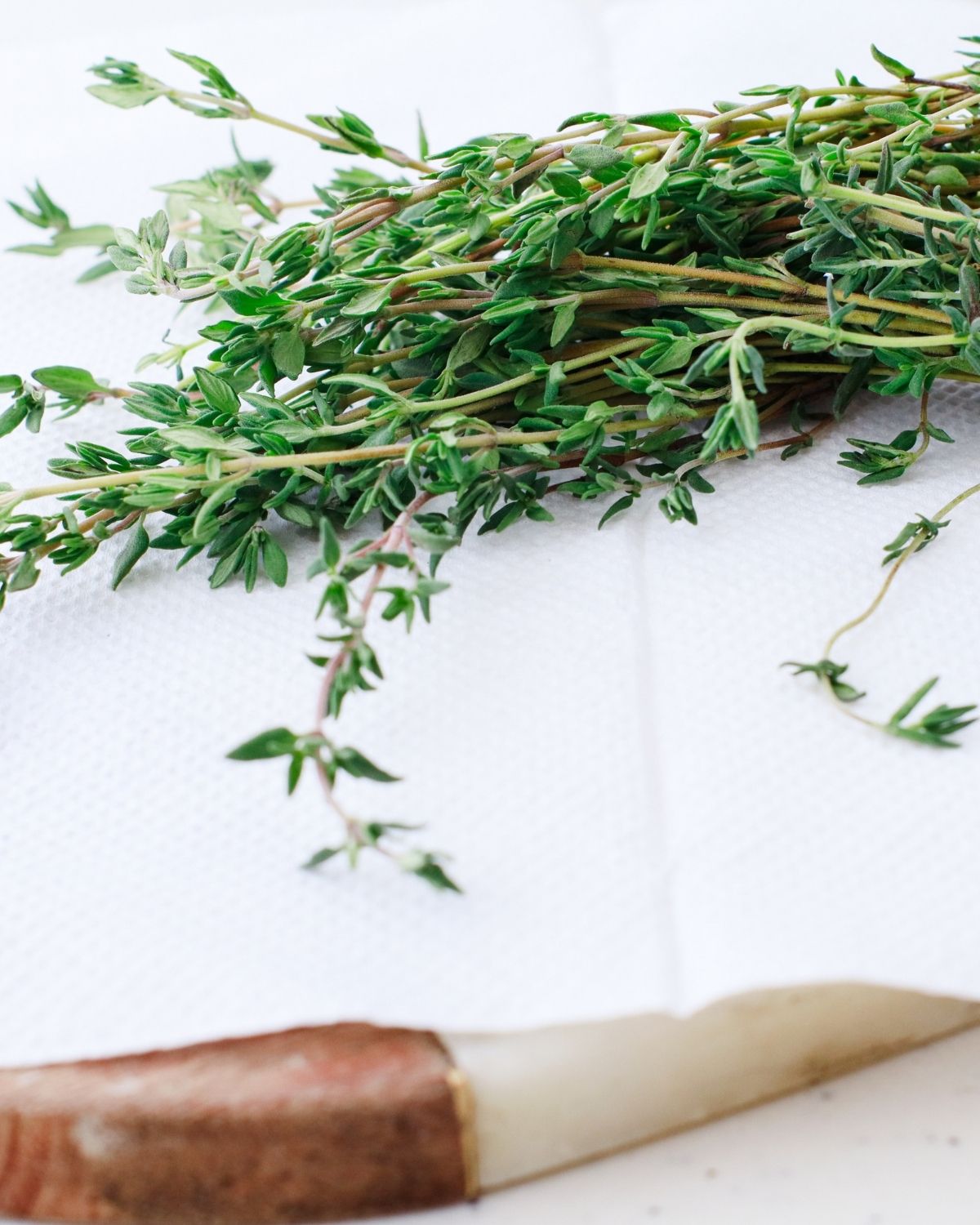
A bunch of thyme often lasts across several meals because you only need a little at a time. But if you're like me and ended up with a big bunch of thyme, here's the easiest way to store it.
The trick is managing moisture: remove water clinging to the leaves, wrap the sprigs loosely, and check them regularly instead of forgetting the bag at the back of the fridge. It's what I do when I freeze and store green onions too.
Quick Look: How to Store Fresh Thyme
- 🔪 Prep time: 10 minutes
- 👪 Batch size: 1 bag or bunch of fresh thyme; use as needed
- 📋 What you need: Fresh thyme, paper towels, and a zip-top bag
- ♨️ Method: Sort → rinse → dry → wrap → refrigerate
- ⭐ Difficulty: Easy
- 🥣 Use it in: Anna potatoes, eggs, soups, sauces, marinades and Za'atar dressing.
Summarize & Save This Content With AI
Jump to:
What's So Great About This Method?
- Simple supplies: No special herb keeper is needed- just like with my homemade dried dill.
- Easy to check: Keep the sprigs in one bundle so you can inspect the leaves and towel.
- Less last-minute prep: The thyme is rinsed and ready to strip from the stems when you cook.
- Useful for small amounts: Take out a few sprigs and return the rest to the fridge. I always end up using a few whenever I make a batch of homemade blueberry vinegar.
What You’ll Need
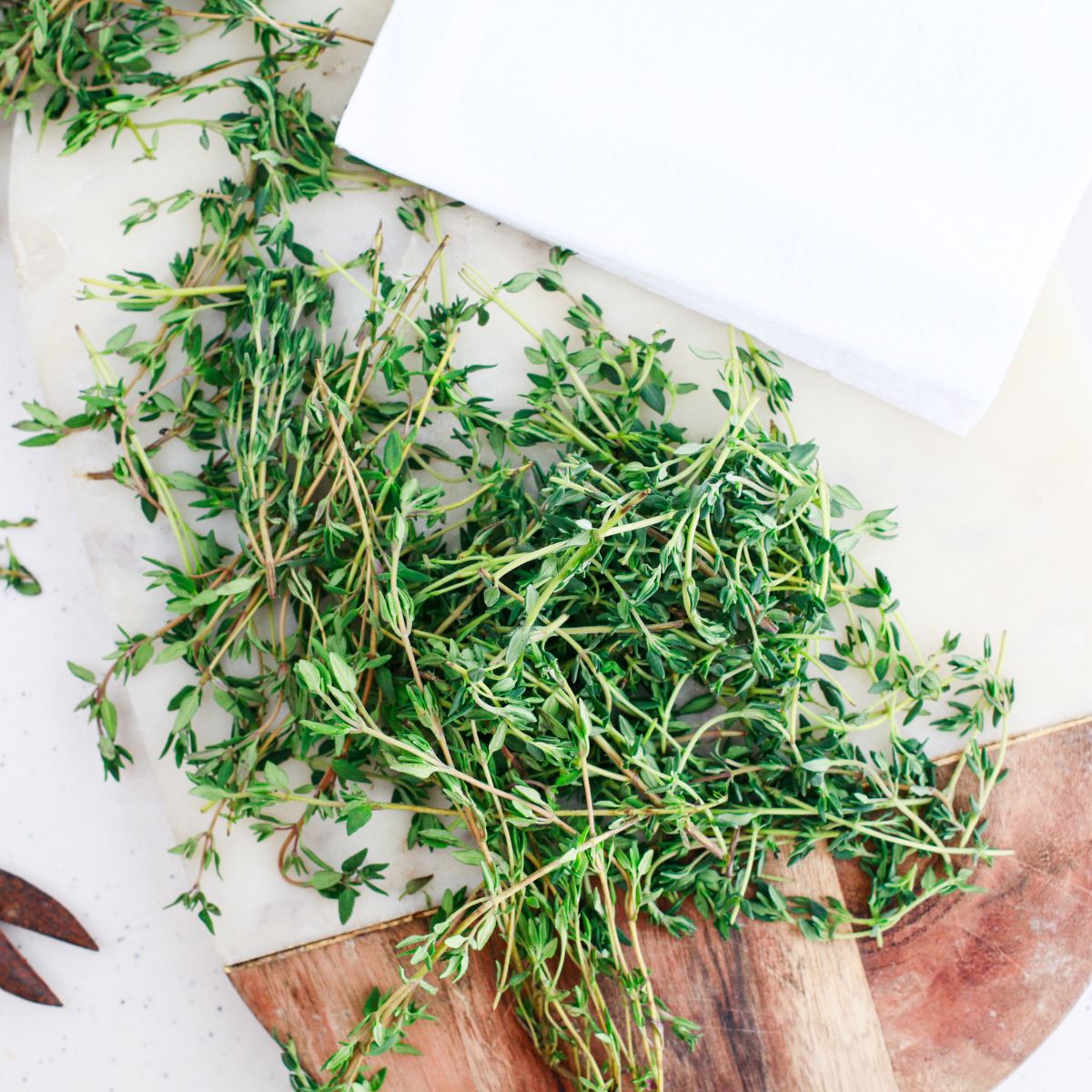
Fresh thyme: Choose fragrant sprigs with healthy leaves. Remove damaged or yellowing pieces before packing, and discard any moldy or slimy thyme.
Paper towels: Use clean towels to blot the washed herbs and wrap the sprigs loosely. Replace the wrapping if it becomes wet.
A zip-top bag: Holds the bundle together without crushing it. Leave a small opening rather than squeezing the herbs into a tightly packed bag.
See the how-to card below for the complete method.
Other Ways to Store Thyme
- Storing unwashed thyme: If you prefer to wash just before cooking, remove damaged pieces, wrap the sprigs in a barely damp paper towel, and refrigerate in a bag. Rinse before using.
- Dry it for the spice cupboard: Thyme is a woody herb that dries well. Use a reliable herb-drying method and store fully dried leaves in an airtight container. I do this when I have extra bell peppers- I just make some Air Fryer dehydrated bell peppers.
How to Store Fresh Thyme in the Fridge
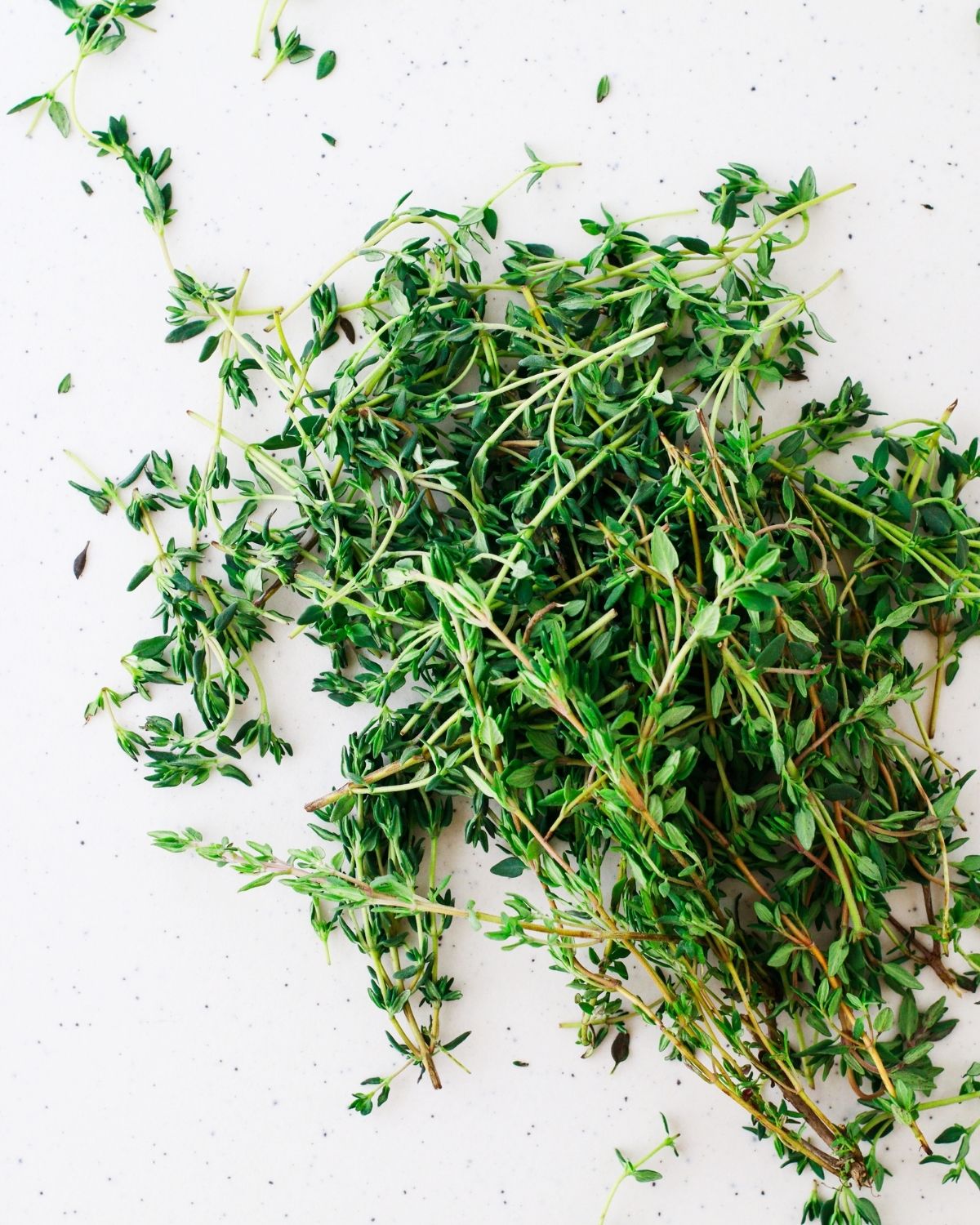
Step 1: Sort the thyme and remove damaged sprigs. Rinse the healthy sprigs under cool running water, then use a salad spinner or clean towel to remove the water.
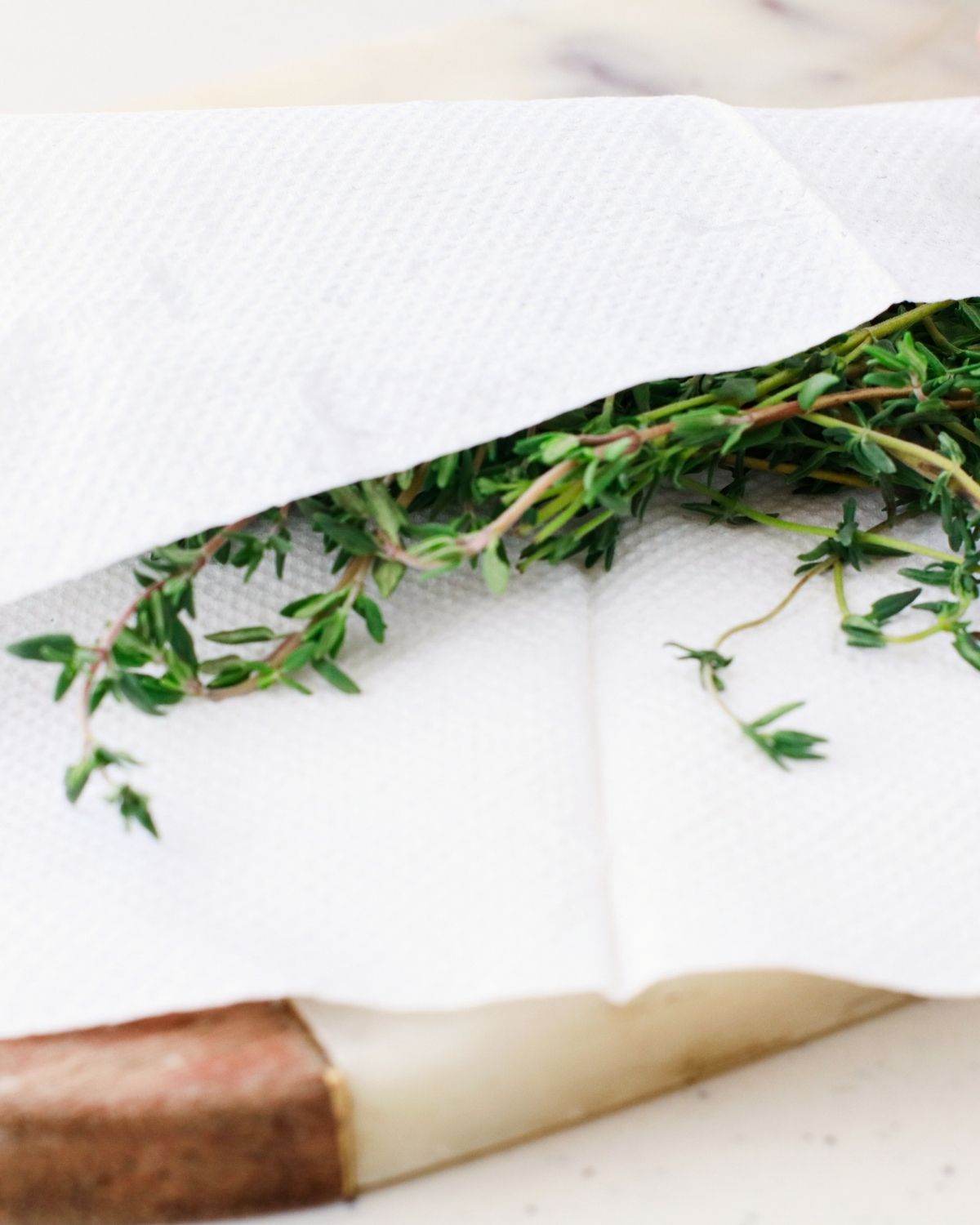
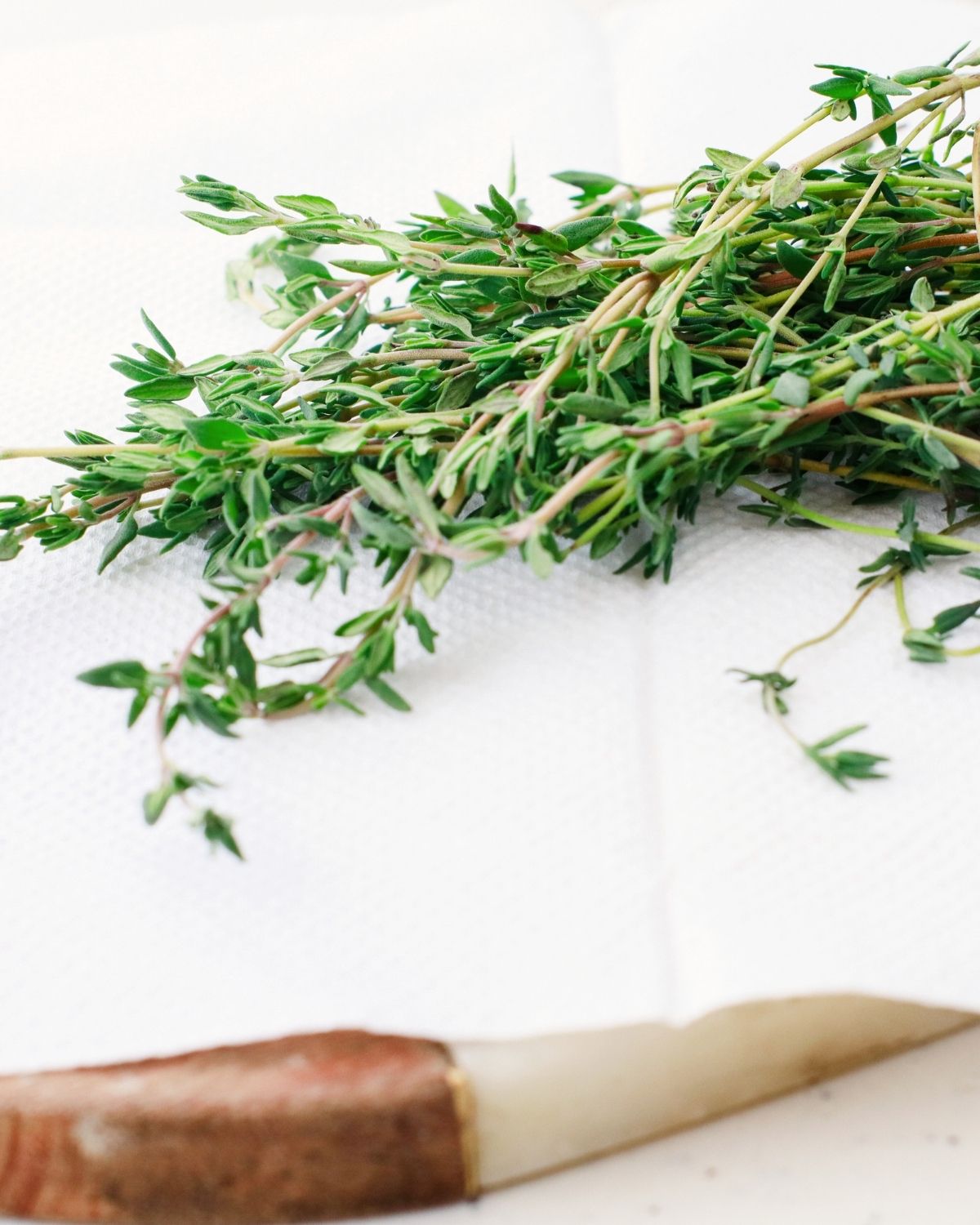
Step 2: Blot away any remaining surface moisture with a clean kitchen towel or paper towel. Lay the sprigs near one edge of a couple of stacked paper towels.
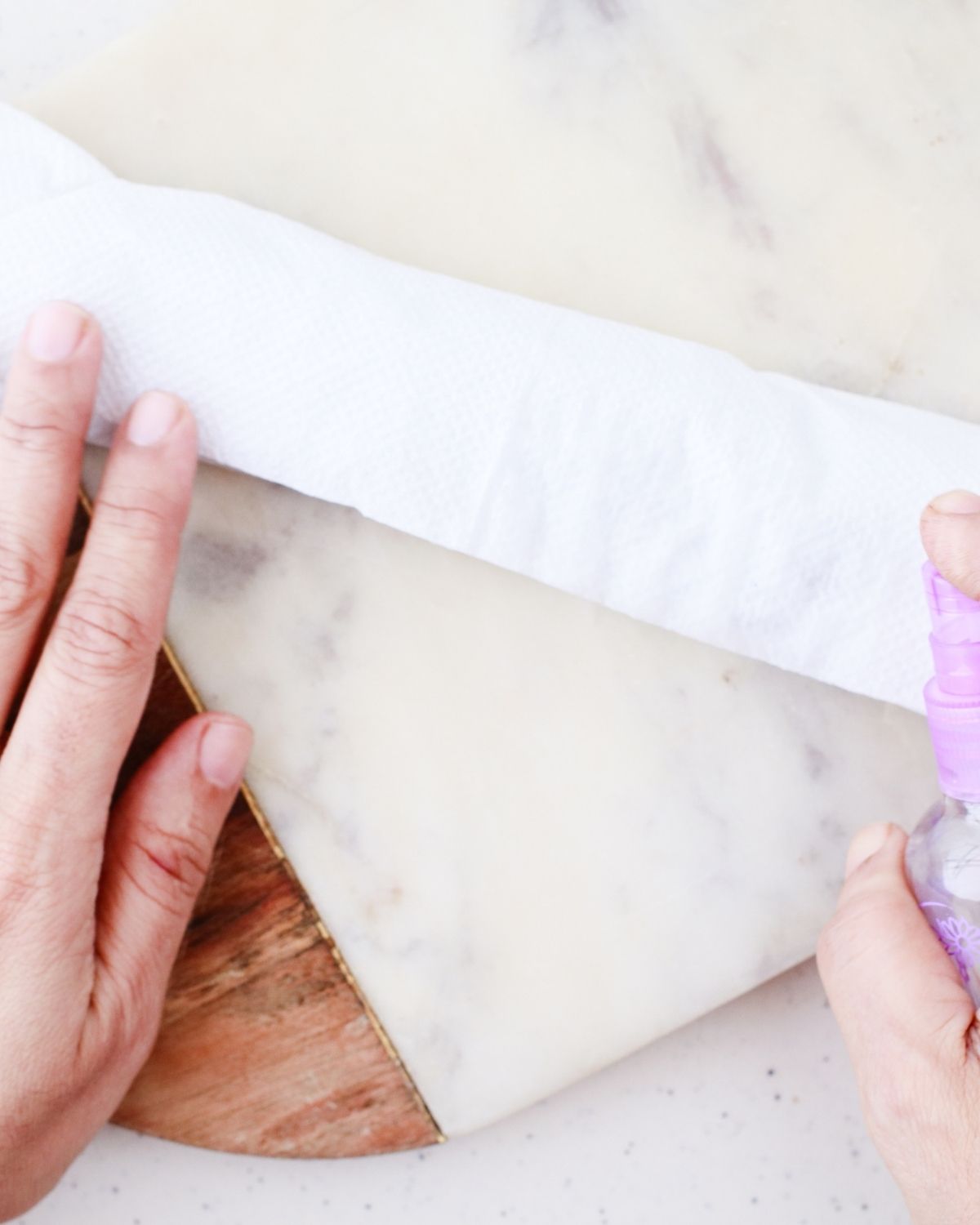
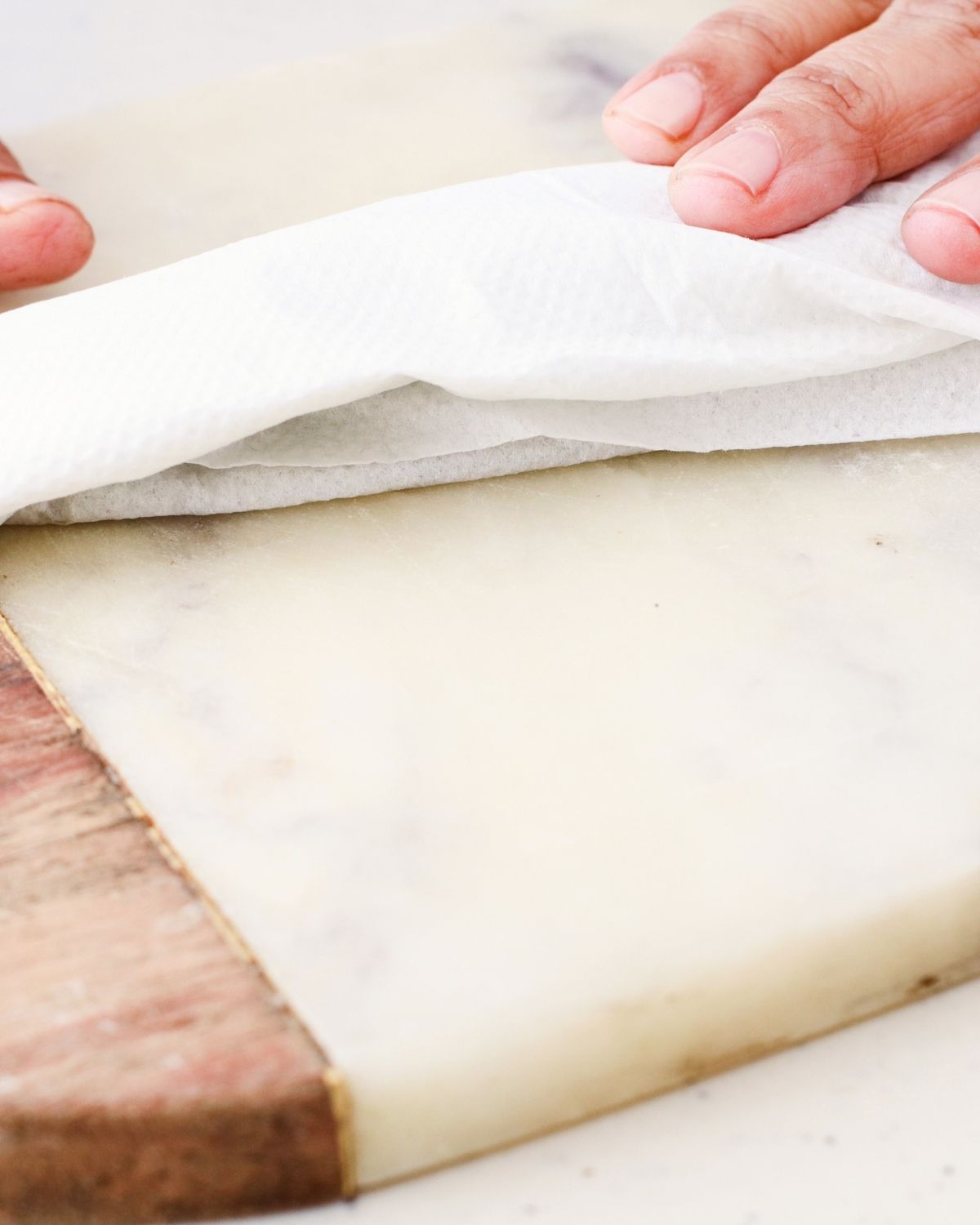
Step 3: Roll the towels loosely around the thyme to form a bundle. Avoid pressing or crushing the delicate leaves.
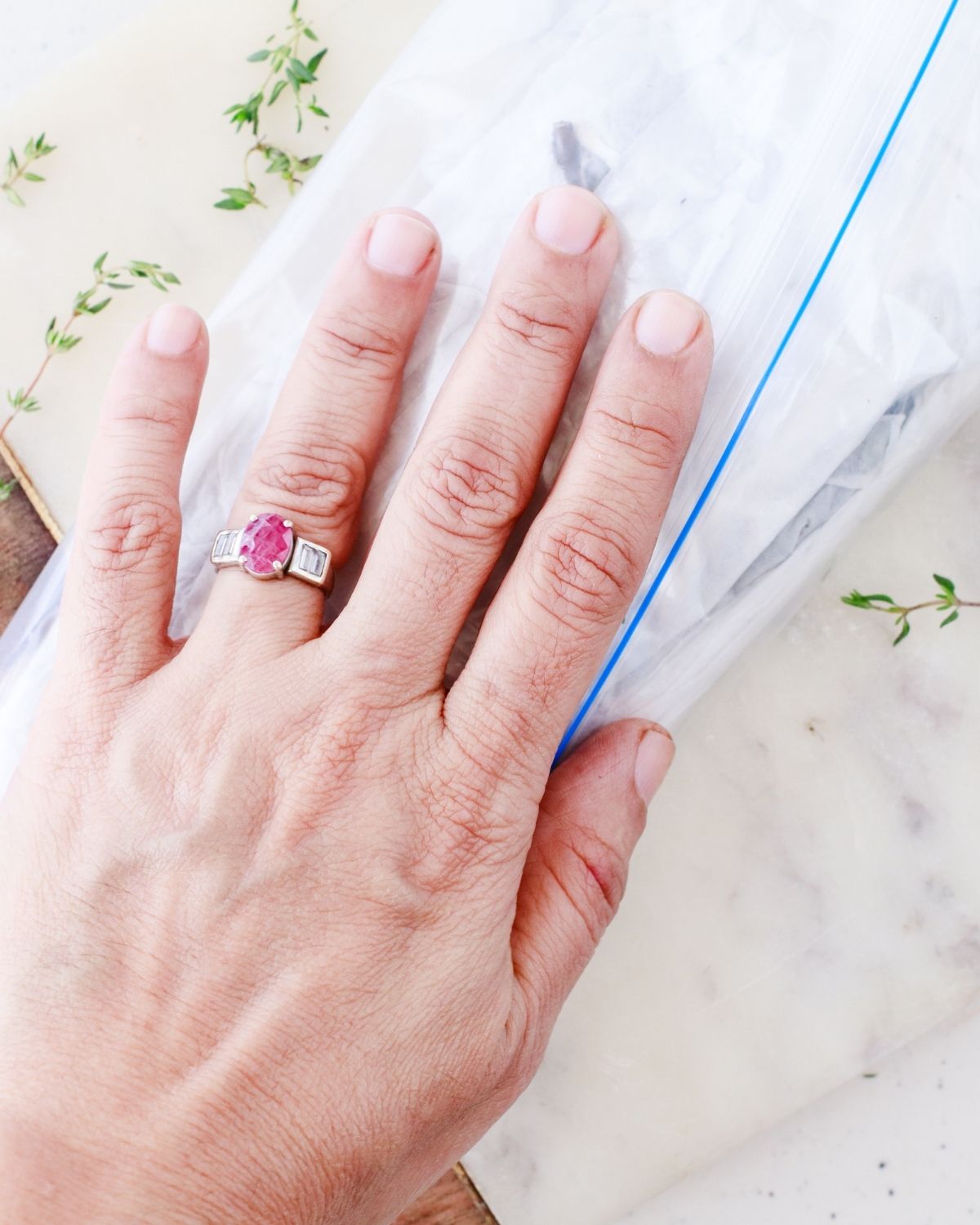
Step 4: Slide the wrapped thyme into a zip-top bag and close it most of the way, leaving a small opening. Refrigerate in the crisper drawer and check the thyme and towel daily.
💭 Top Tip
Do not bag the thyme while it is dripping wet. Blot off the rinse water first, and replace a wet wrapping towel promptly rather than leaving the sprigs sitting in moisture.
Tips & Tricks for Storing Thyme
- Start with fresh sprigs: Storage cannot restore thyme that is already spoiled.
- Leave the leaves on the stems: Strip off only what you need when it is time to cook.
- Keep the bundle loose: Make room in the bag so the sprigs are not compressed. I always do this when I store my homemade chia microgreens.
- Label the bag: Add the packing date and keep it somewhere visible.
- Check before each use: Discard thyme with mold, slime, or an unpleasant smell. Freeze leftovers early if you will not use them soon.
How to Use Fresh Thyme
Strip the leaves from a sprig by holding its tip and sliding your fingers down the stem in the opposite direction to the leaves. Chop the leaves if you want them distributed finely through a dish.
Add thyme to roasted vegetables (like roasted broccoli and potatoes), scrambled eggs, tomato sauces, soups (like my garlic mushroom soup), or chicken marinades. Whole sprigs can flavor a simmering soup or stew; remove the woody stems before serving.
I love using this thyme for my feta Saganaki and to garnish my French onion soup chicken.
Troubleshooting and FAQs
Use it within the next few days for the best quality and check daily. Starting freshness and moisture make a big difference, so do not rely on a guaranteed one- or two-week shelf life. Health Canada recommends up to five days for refrigerated fresh herbs.
You can store it unwashed and rinse just before cooking. For the washed method shown here, remove the surface water thoroughly before wrapping.
Use clean towels to blot the washed thyme and wrap without leaving it wet. If storing unwashed sprigs, a barely damp towel is an option. The towel should never be soaked; replace it if water collects.
Yes. Freeze washed leaves in water in an ice cube tray, then keep the cubes in a labeled freezer container for up to three months. Add them to cooked dishes; freezing changes the texture, so they are less suitable as a fresh garnish.
For this storage method, keep cut thyme in the refrigerator. A living thyme plant in a pot is different and needs appropriate light, watering, and drainage.
More Food Preserves
Looking for more kitchen basics? Try these:


If you tried this technique of storing fresh thyme or any other recipe on my website, please leave a 🌟 star rating and let me know how it went in the 📝 comments below. Thanks for visiting!
How to Store Fresh Thyme

Ingredients
- 1 bag thyme
Instructions
- Wash the thyme sprigs in cool water and dry them thoroughly in a salad spinner.
- Remove excess moisture by dabbing them with kitchen towels.
- Transfer the thyme to one edge of a couple of stacked paper towels and roll it up.
- Move into a Ziploc bag and seal the bag almost shut, leaving a small space for air to flow through.
- Store the bag in the crisper drawer of your refrigerator. Use within the next few days, check daily, and replace the paper towel if it becomes wet. Discard thyme with mold, slime, or an unpleasant smell.
Notes
- Choose fresh thyme sprigs with healthy green leaves and a strong aroma. Remove any yellowed, wilted, or damaged sprigs before storing.
- Rinse the thyme under cool running water to remove dirt and debris, then dry it thoroughly using a salad spinner or clean kitchen towel.
- Pat the sprigs with paper towels to remove any remaining surface moisture, as excess water can encourage spoilage.
- Keep the thyme leaves attached to their stems while storing, and strip off only what you need when cooking.
- Wrap the thyme loosely in clean paper towels without pressing or crushing the delicate leaves.
- Place the wrapped thyme in a zip-top bag and seal it almost completely, leaving a small opening for airflow.
- Store the bag in the crisper drawer of your refrigerator, away from areas where the thyme could get crushed.
- Check the thyme daily and replace the paper towels whenever they become wet or excessively damp.
- Label the bag with the storage date and use the thyme within the next few days for the best freshness and flavor.
- Discard any thyme that develops mold, slime, or an unpleasant smell.
- If you prefer to store thyme unwashed, wrap the sprigs in a barely damp paper towel and rinse them just before using.
- Freeze extra thyme in ice cube trays with water for use in soups, stews, and sauces. Frozen thyme is best used in cooked dishes rather than as a fresh garnish.