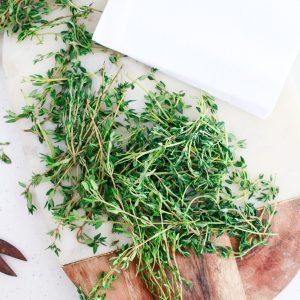
How to Store Fresh Thyme

Learn how to store fresh thyme in the fridge using paper towels and a zip-top bag. Keep your herbs fresh, reduce waste, and prevent excess moisture.
Ingredients
- 1 bag thyme
Instructions
- Wash the thyme sprigs in cool water and dry them thoroughly in a salad spinner.
- Remove excess moisture by dabbing them with kitchen towels.
- Transfer the thyme to one edge of a couple of stacked paper towels and roll it up.
- Move into a Ziploc bag and seal the bag almost shut, leaving a small space for air to flow through.
- Store the bag in the crisper drawer of your refrigerator. Use within the next few days, check daily, and replace the paper towel if it becomes wet. Discard thyme with mold, slime, or an unpleasant smell.
Notes
- Choose fresh thyme sprigs with healthy green leaves and a strong aroma. Remove any yellowed, wilted, or damaged sprigs before storing.
- Rinse the thyme under cool running water to remove dirt and debris, then dry it thoroughly using a salad spinner or clean kitchen towel.
- Pat the sprigs with paper towels to remove any remaining surface moisture, as excess water can encourage spoilage.
- Keep the thyme leaves attached to their stems while storing, and strip off only what you need when cooking.
- Wrap the thyme loosely in clean paper towels without pressing or crushing the delicate leaves.
- Place the wrapped thyme in a zip-top bag and seal it almost completely, leaving a small opening for airflow.
- Store the bag in the crisper drawer of your refrigerator, away from areas where the thyme could get crushed.
- Check the thyme daily and replace the paper towels whenever they become wet or excessively damp.
- Label the bag with the storage date and use the thyme within the next few days for the best freshness and flavor.
- Discard any thyme that develops mold, slime, or an unpleasant smell.
- If you prefer to store thyme unwashed, wrap the sprigs in a barely damp paper towel and rinse them just before using.
- Freeze extra thyme in ice cube trays with water for use in soups, stews, and sauces. Frozen thyme is best used in cooked dishes rather than as a fresh garnish.
Nutrition
Calories: 0.2kcalCarbohydrates: 0.04gProtein: 0.01gFat: 0.003gPolyunsaturated Fat: 0.002gSodium: 0.01mgPotassium: 1mgFiber: 0.02gVitamin A: 8IUVitamin C: 0.3mgCalcium: 1mgIron: 0.03mg
Tried this recipe?Share a photo of what you made on Instagram and tag us @cookinuplife or hashtag it #cookinuplife