Yellow Curry Paste
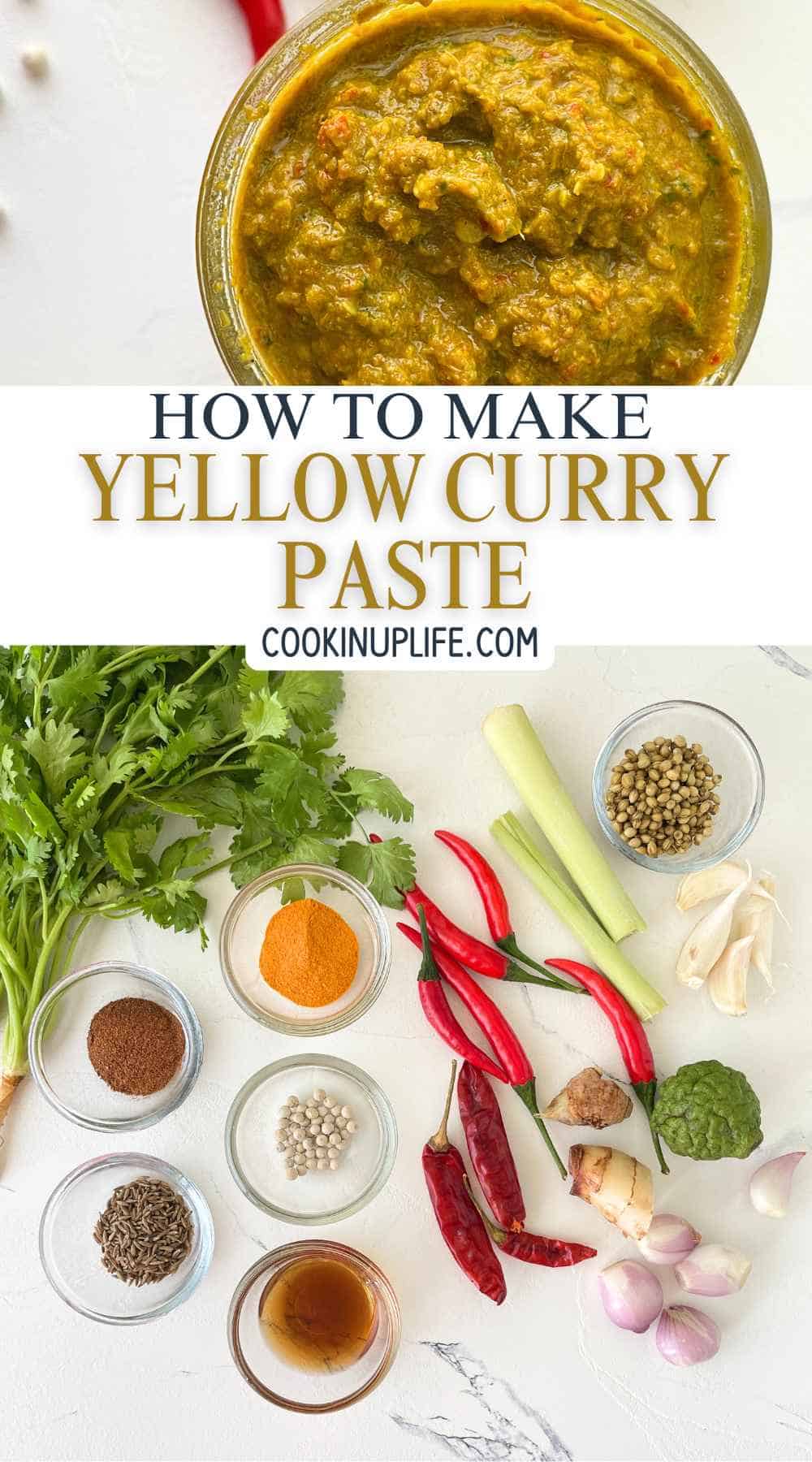
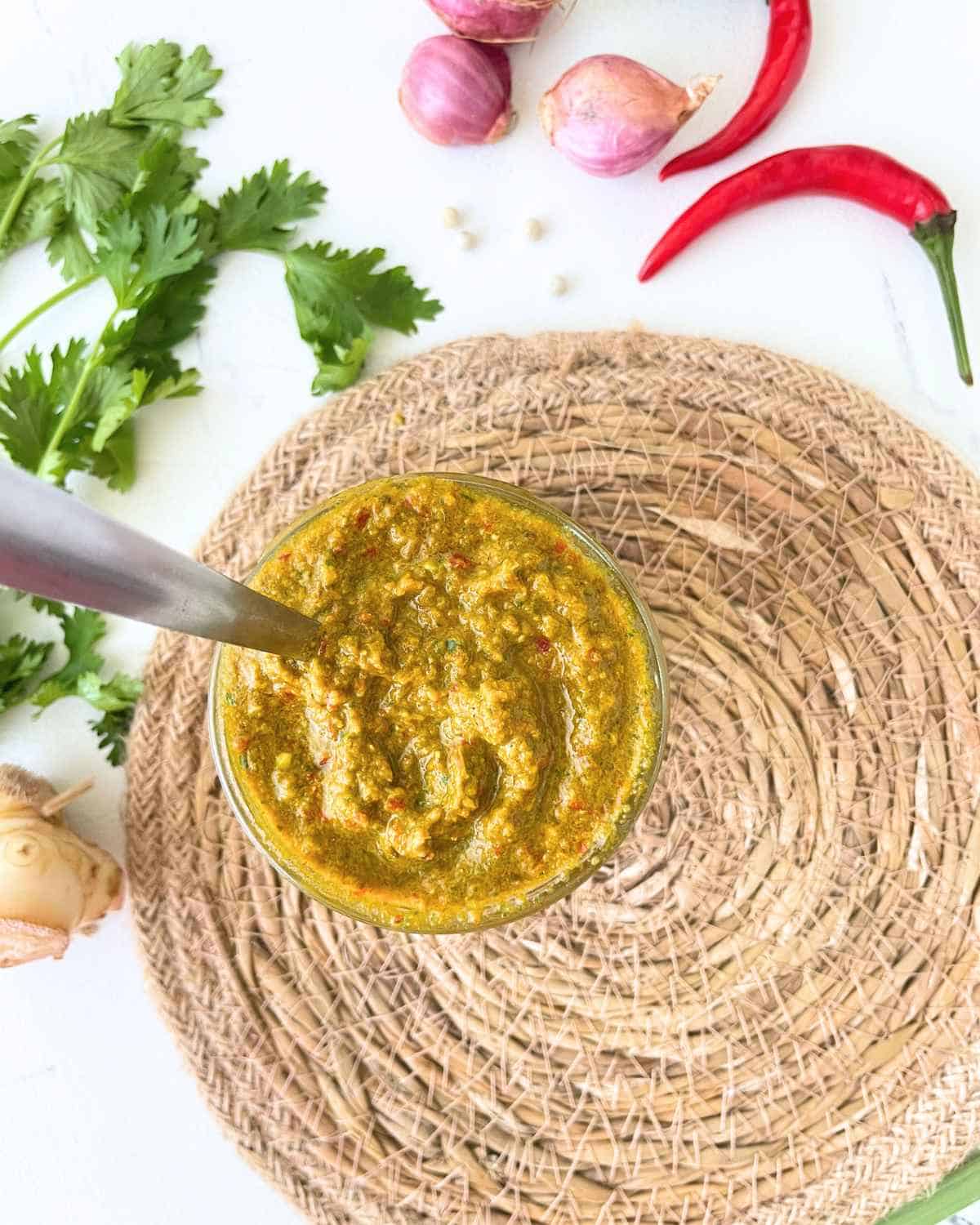
This fragrant and savory yellow curry paste is the perfect base for all your homemade curries! It's versatile, flavorful and SO much better than all those store-bought curry pastes and powders you've been using all this while.
Best of all, it's adaptable for those with dietary restrictions, and is really easy to batch make too- just like my homemade garam masala.
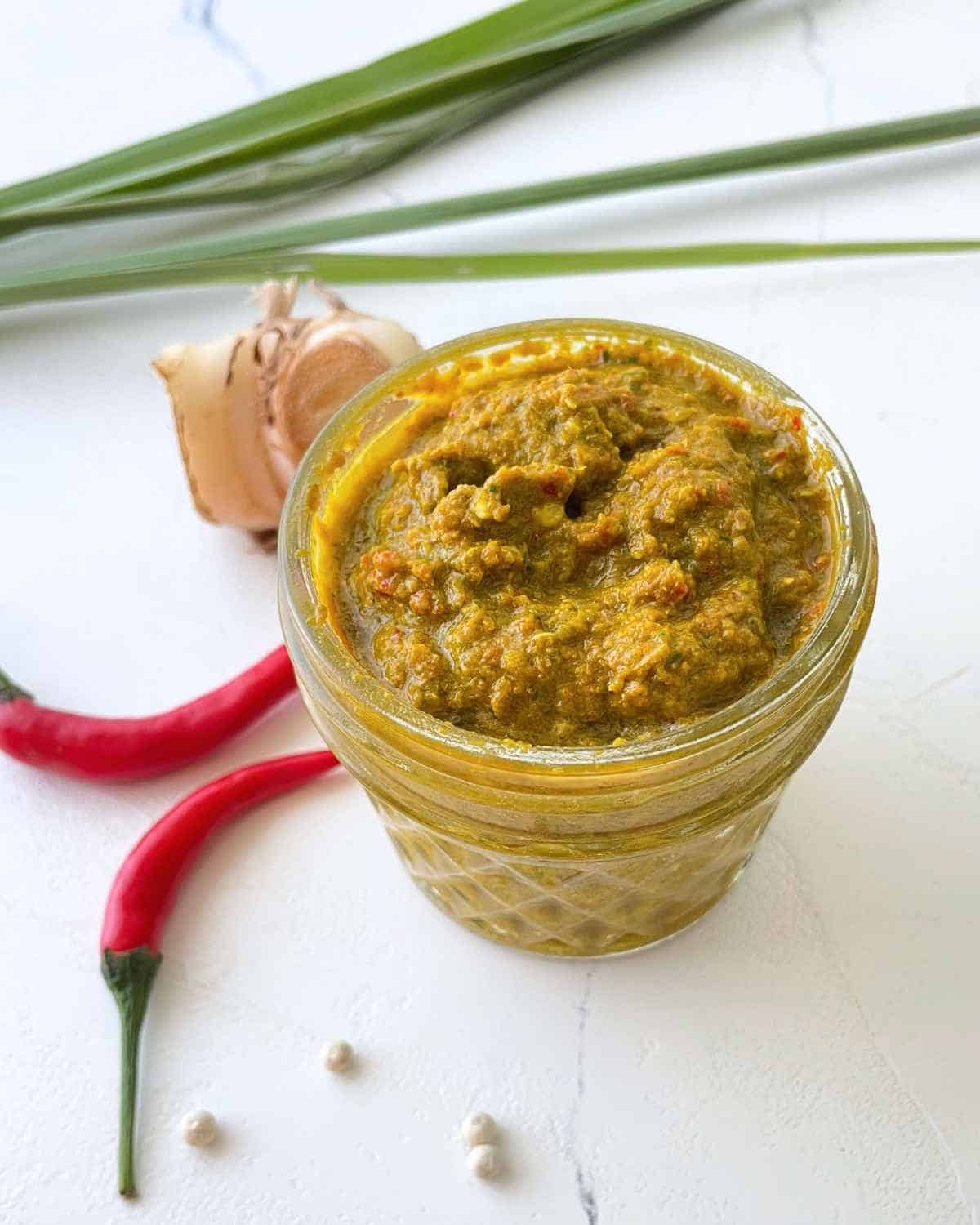
I've been on a mission to make healthier, preservative-free homemade versions of my favorite seasonings, spices and sauces, and my kitchen is busy with lots of experiments every single day.
Recently, I tried making some homemade chaat masala and a delicious vegan ranch seasoning mix at home, and they both turned out amazing, which inspired me to try a simple curry paste too.
Quick Look: Yellow Curry Paste
- 🔪 Prep time: 5 minutes.
- ⏲️ Cook time: 5 minutes (dry roasting spices) + blending.
- 👪 Servings: 8.
- 📋 Main ingredients: Lemongrass, kaffir lime, galangal, ginger, garlic, shallots, fresh and dried chilies, turmeric, coriander seeds, cumin seeds, white peppercorns, curry powder, cilantro, fish sauce.
- ♨️ Cooking method: Dry roast whole spices 🡢 add all ingredients to blender 🡢 blend to a slightly coarse paste 🡢 jar and refrigerate.
- ⭐ Difficulty: Easy.
- 🥣 Serving ideas: Use as a curry base (like my homemade Tikka masala), marinade for meats, or stir into coconut milk soups.
Summarize & Save This Content With AI
Jump to:
What's So Great About the Recipe?
- It's also such a great condiment to have at hand, to quickly put together a meal that tastes incredible and is great for your family!
- While this paste has predominant Thai flavors (like my homemade Thai seasoning), it's actually perfect to use with quite a LOT of recipes, not just Thai food.
- The fact that you can make a big batch of curry paste with just 15 minutes of kitchen time, and use it for months, is what I love the most about this recipe.
Recipe Ingredients
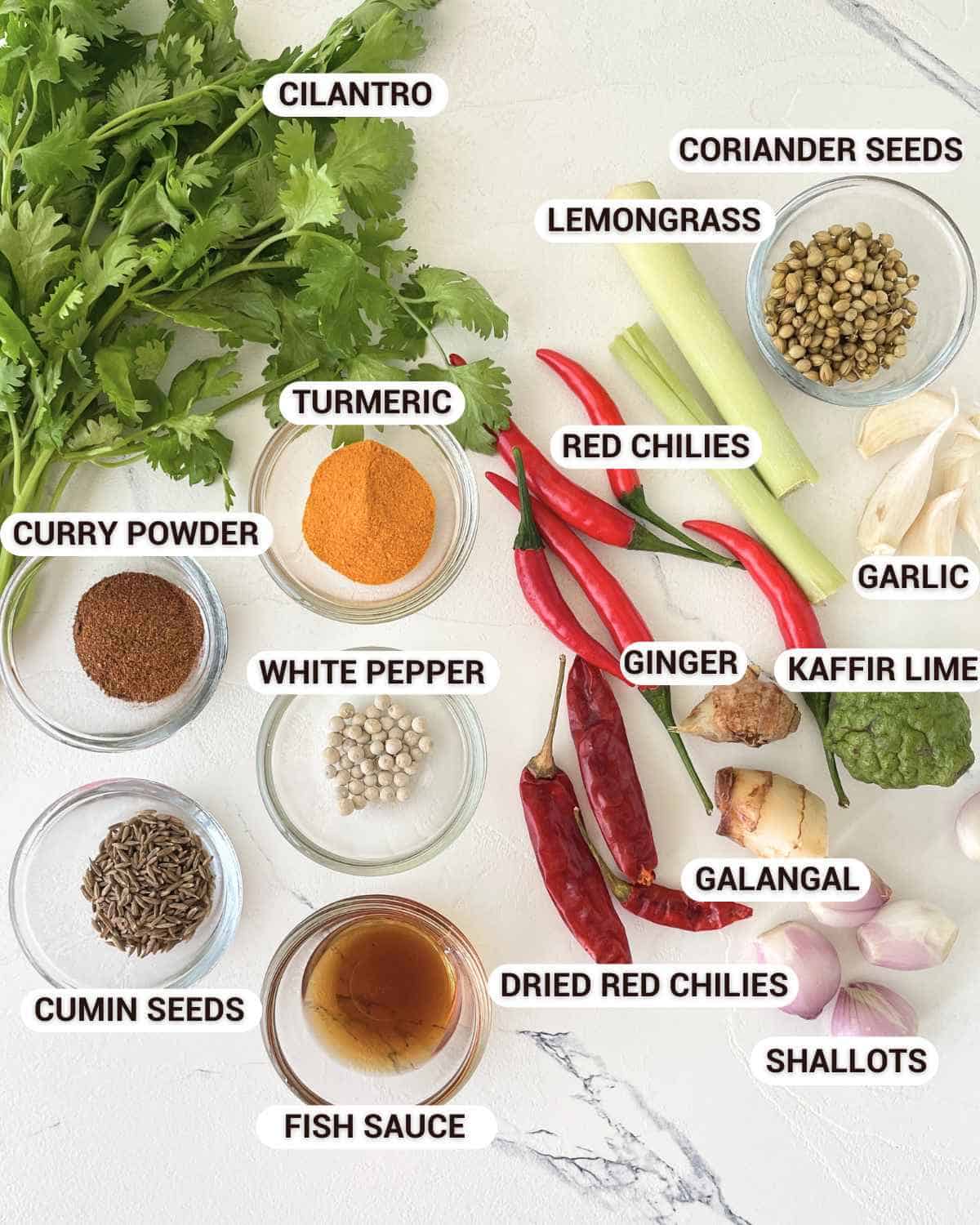
- Aromatics: The curry paste needs to pack in a lot of flavor, so I used a mix of shallots, garlic, ginger and galangal. You can use ginger garlic paste too!
- Whole spices: For the whole spices, I used cumin seeds, which peppercorns and some coriander seeds.
- Cilantro: You'll need lots of fresh cilantro, for that pop of color and freshness.
- Kaffir lime: For that tanginess and sourness.
- Turmeric: For that pop of color and the earthy flavor and aroma.
- Fish sauce: Just a dash, for that umami deliciousness- I used it for my Prik Nam Pla recipe too.
- Chilies: I used quite a lot of red chilies here, because I love a spicy curry paste. You can adjust this to your liking and tone down the spice if you want to.
- Curry powder: Any classic curry powder should do the trick. If you don't have this, you can use vegetable or chicken stock powder. I like using my homemade vegetable bouillon cube sometimes.
- Lemongrass: To get that aromatic, lemony flavor. If you don't have this, use some lemon or lime juice and some zest instead.
See recipe card for quantities.
Substitutions & Variations
- I used a mix of dried red chilies and Thai bird eye chilies here, but you can totally use any other kind of chilies too. Sometimes, I end up using my chilies preserved in oil.
- To make a vegan version of this recipe, simply skip adding the fish sauce, and add some mushroom powder instead.
- To make the yellow curry paste gluten-free, make sure you choose gluten-free curry powder.
How to Make Yellow Curry Paste
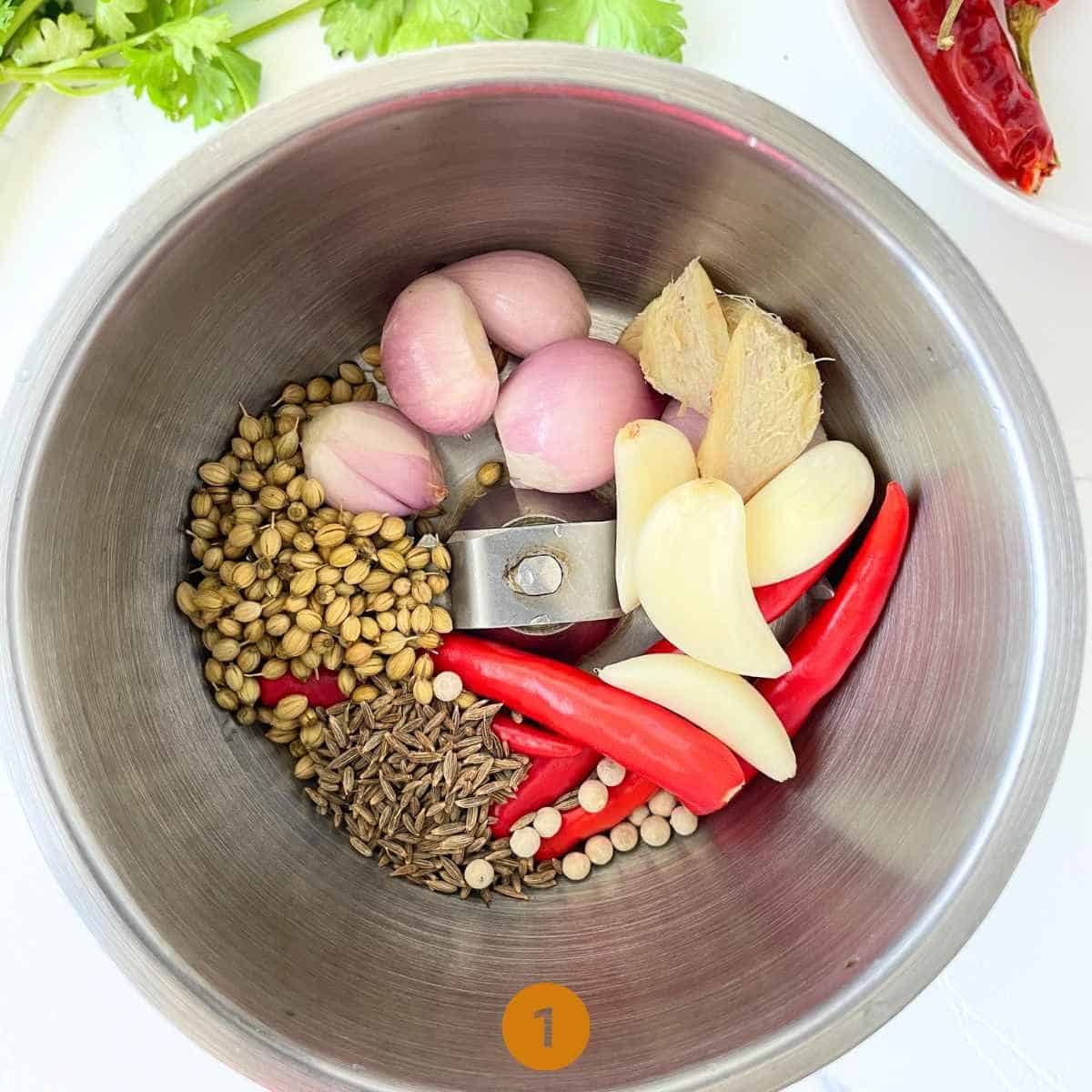
In a blender jar, add the whole spices, aromatics and chili peppers.
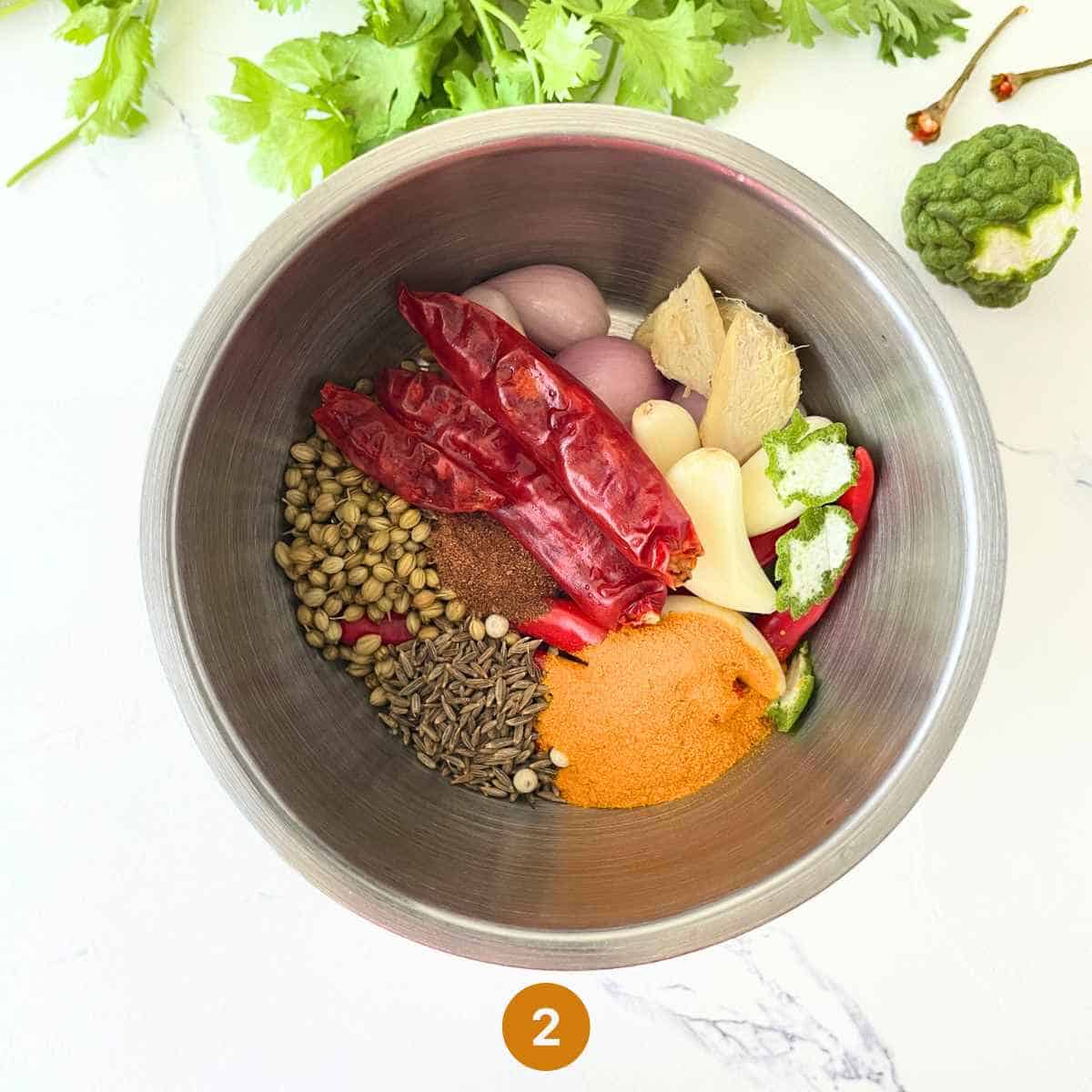
Now add in the kaffir lime and turmeric powder.
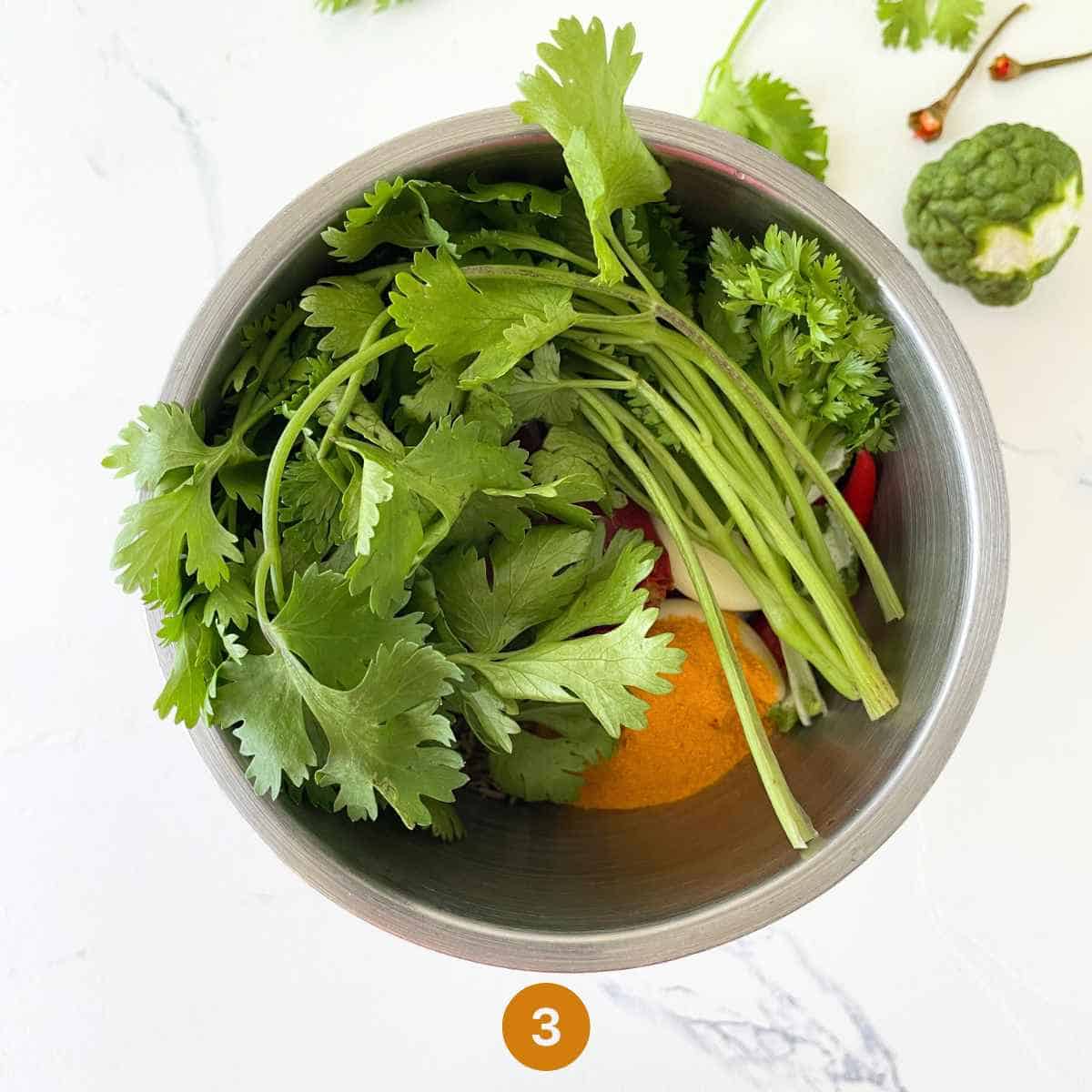
Add a handful of cilantro leaves with a bit of the stem portion too and give this a blitz.
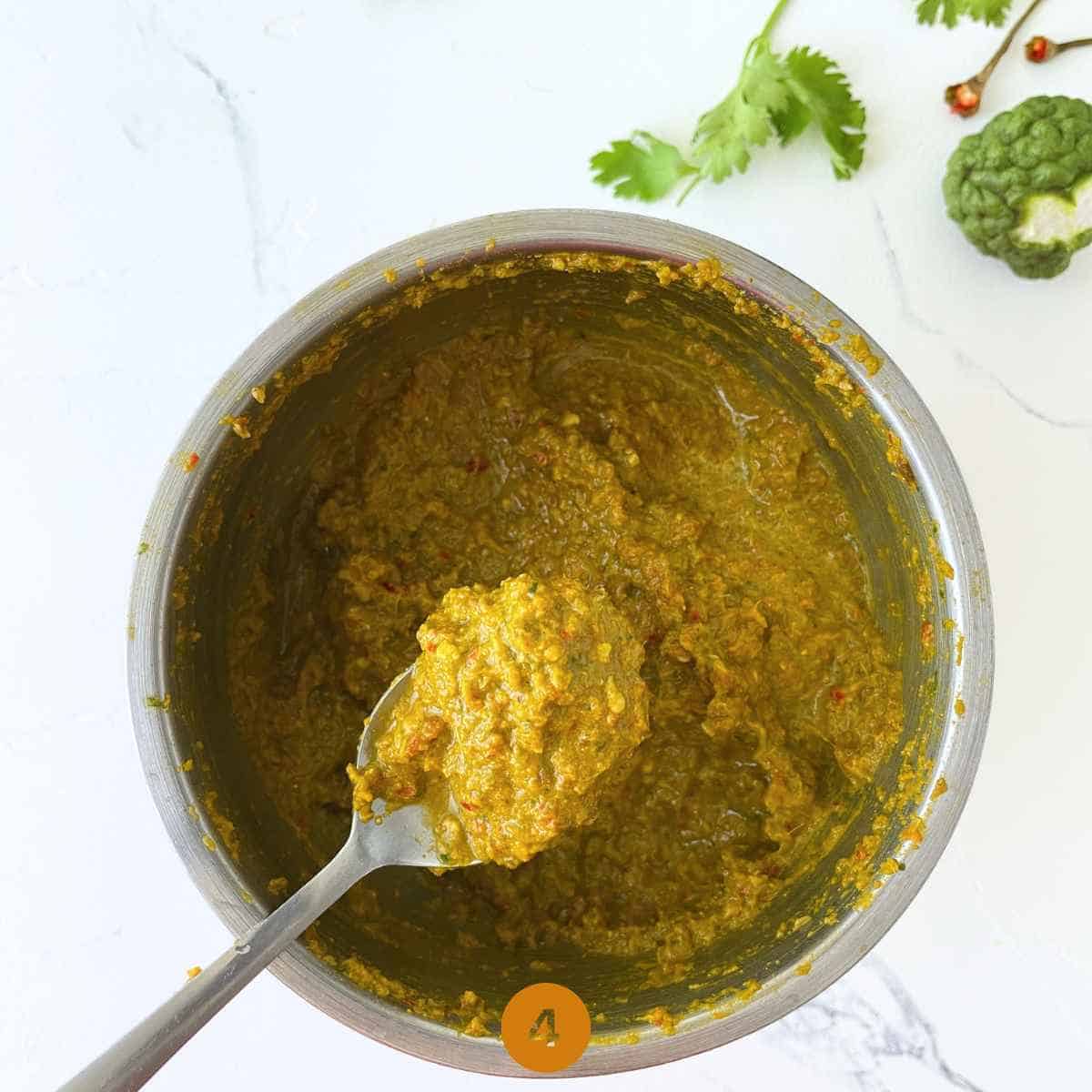
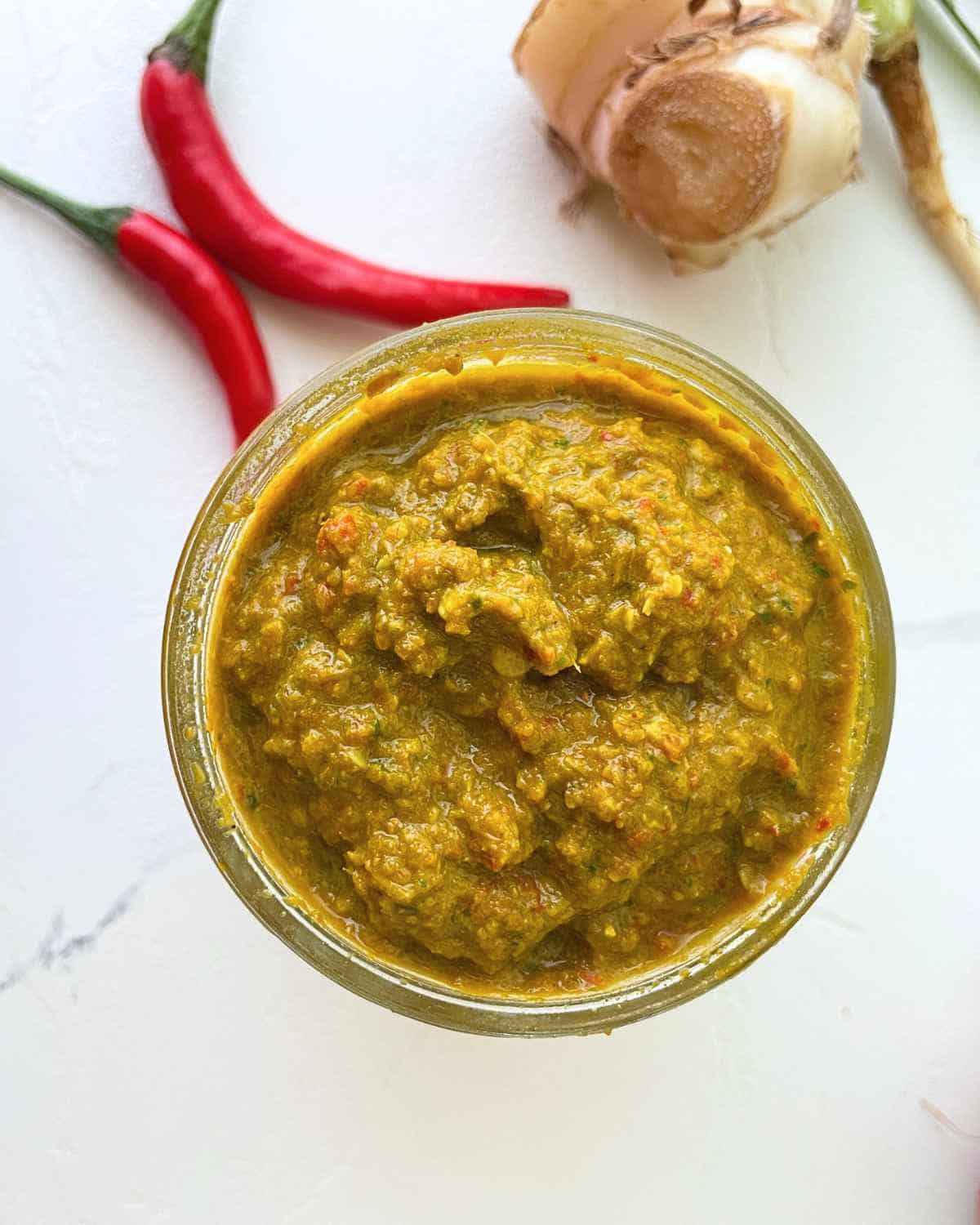
Blend until the mixture is slightly coarse and looks like this. Transfer it to a jar and refrigerate.
Tips & Tricks to Nail the Recipe
- To lend the curry paste that authentic flavor and texture, grind it using a mortar and pestle instead of using your blender. This may take a bit more time and effort, but it's totally worth it!
- For extra flavor, dry roast the whole spices in a pan over medium heat until they turn aromatic, then take them off heat and let them cool down completely before you use them for the recipe. I did this when I made my green chili pickle too.
- When using lemongrass, make sure you chop out the tougher, fibrous portions of the stalks and just use the softer, white portion.
- If the paste seems too try, you can add a splash of water into it to get it to a smoother, pasty consistency- like I did when I made my mint coriander chutney.
- For extra flavor, you can also add some shrimp paste into the mix towards the end.
How to Use the Yellow Curry Paste
You can use this yellow curry paste as a base for your favorite curries and stews. I love using it as a marinade for meats too! Just a spoonful should work well.
If you've used the paste to make a curry and it turns out too spicy or intense, you can tone it down by adding a splash of coconut milk or some homemade coconut cream into the curry.
Troubleshooting & FAQs
Your leftover Thai curry paste should stay fresh in the refrigerator for up to 2 weeks. Make sure you use a clean jar or an airtight container to store it, and use a dry spoon to spoon it out whenever you want to.
If you've made a big batch and want it to last longer, you can freeze it too! Just use a freezer-safe bag or container, and it should stay good for up to 6 months.
More Scratch-Made Cooking Essentials
Looking for other recipes like this? Try these:


If you tried this yellow curry paste or any other recipe on my website, please leave a 🌟 star rating and let me know how it went in the 📝 comments below. Thanks for visiting!
Yellow Curry Paste

Ingredients
- 1 stalk lemongrass
- 1 teaspoon fish sauce
- 1 cup cilantro
- 1 tablespoon coriander seeds
- 1 teaspoon cumin seeds
- 1 teaspoon white peppercorns
- 4-5 dried red chilies
- 3-4 Thai bird eye chilies
- 1 teaspoon turmeric powder
- 1 tablespoon curry powder
- ½ cup shallots
- 5-8 garlic
- 1 tablespoon ginger
- ½ tablespoon galangal
- 1 kaffir lime
Instructions
- In a blender jar, add the whole spices, aromatics and chili peppers.
- Now add in the kaffir lime and turmeric powder.
- Add a handful of cilantro leaves with a bit of the stem portion too and give this a blitz.
- Blend until the mixture is slightly coarse and looks like this. Transfer it to a jar and refrigerate.
Notes
- To lend the curry paste that authentic flavor and texture, grind it using a mortar and pestle instead of using your blender. This may take a bit more time and effort, but it's totally worth it!
- For extra flavor, dry roast the whole spices in a pan over medium heat until they turn aromatic, then take them off heat and let them cool down completely before you use them for the recipe.
- When using lemongrass, make sure you chop out the tougher, fibrous portions of the stalks and just use the softer, white portion.
- If the paste seems too try, you can add a splash of water into it to get it to a smoother, pasty consistency.