Homemade Chipotle in Adobo
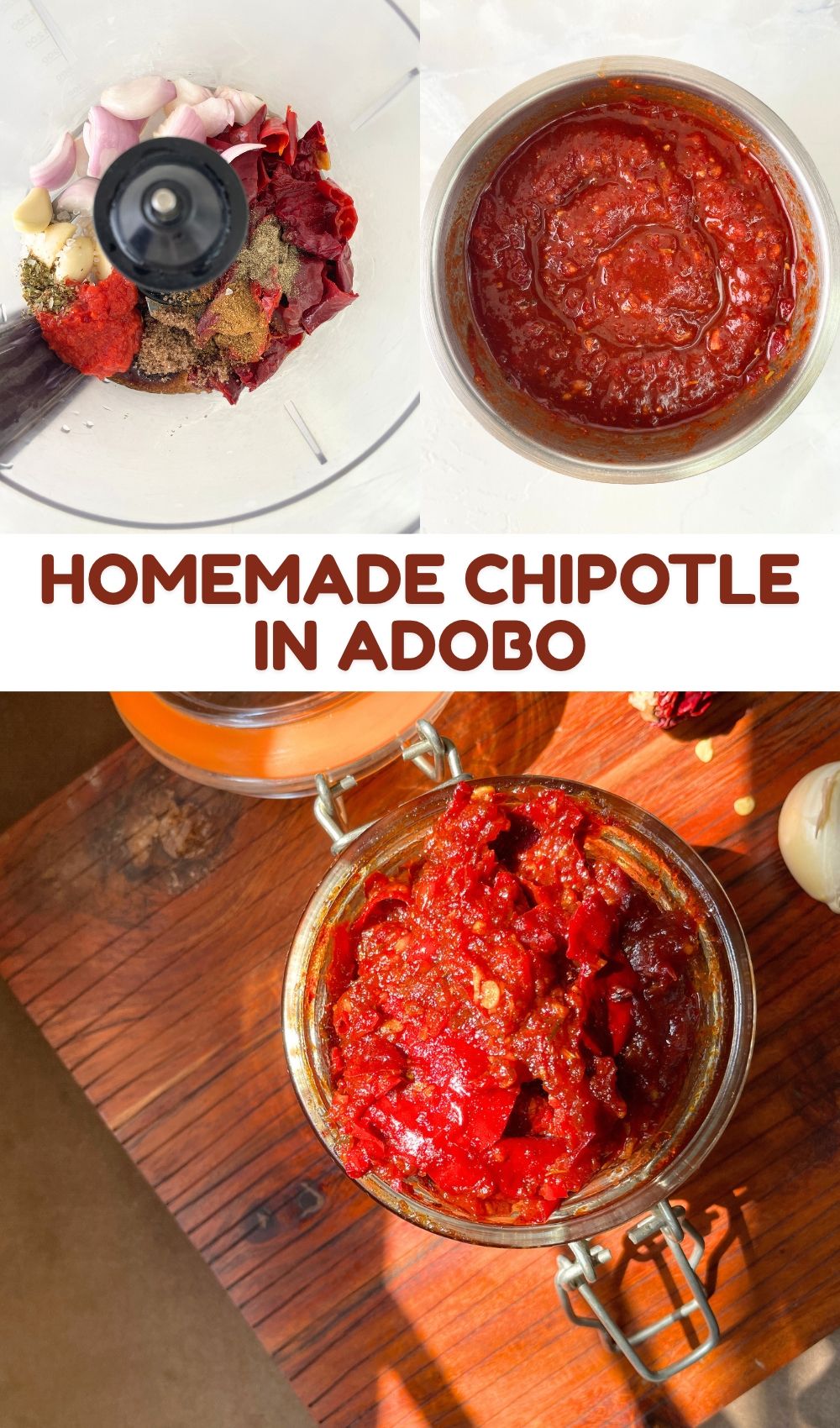
This homemade chipotle in adobo is smoky, tangy, and full of chili flavor. Dried chipotle, guajillo, and ancho chilies blend with tomato, onion, garlic, and warm spices, then simmer into a thick sauce you can spoon into all kinds of meals.
I used it to make my homemade Chipotle aioli, which is my go-to dip for French fries and other fried snacks!
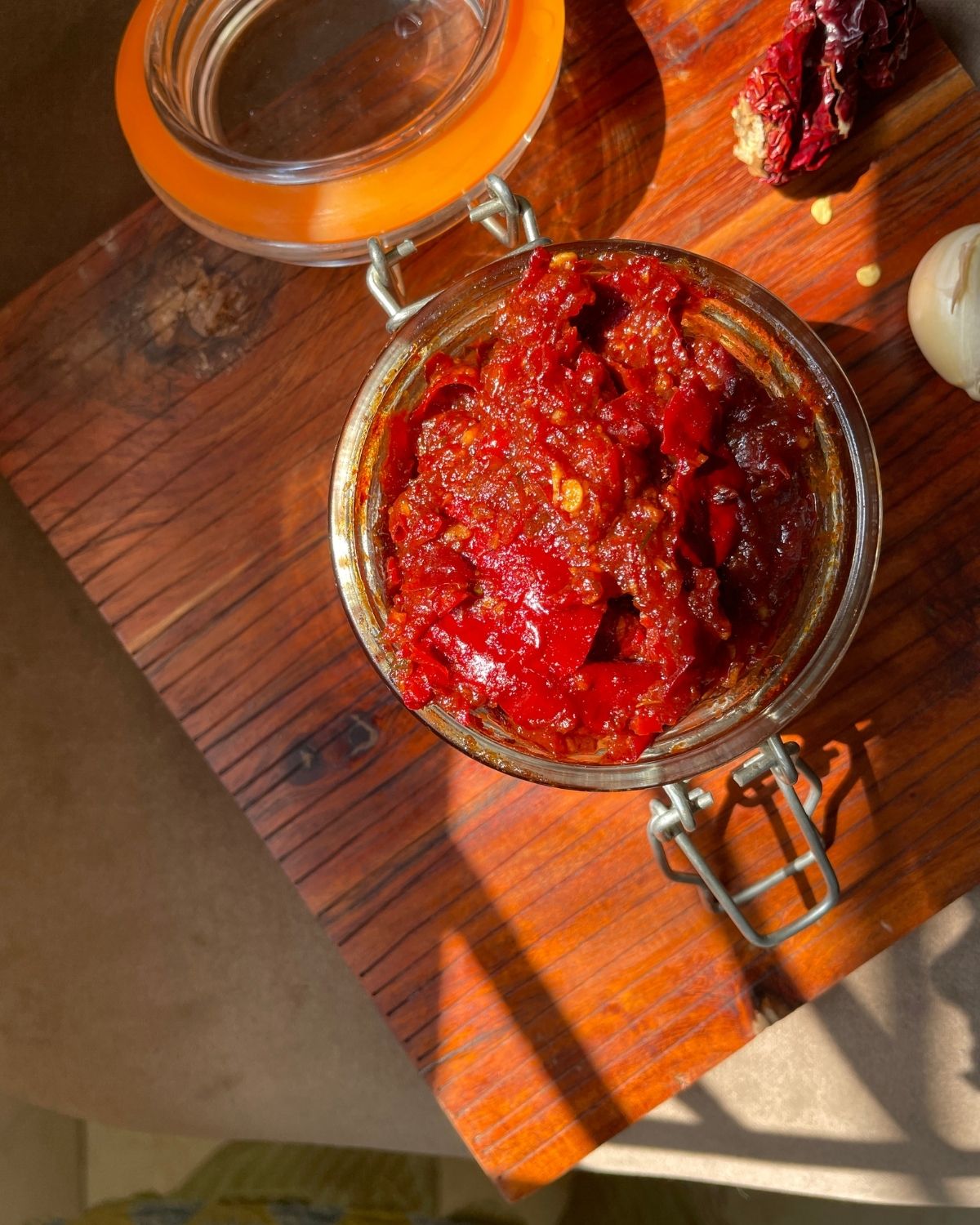
In this version, all the chilies are blended into the adobo rather than left whole. The result is a concentrated chili paste that’s easy to stir into beans, marinades, sauces, and dips.
I've used this for my spicy Chili con Carne and also my homemade Huevos Rancheros.
Quick Look: Homemade Chipotle in Adobo
- 🔪 Prep time: 5 minutes
- ⏲️ Soaking and cooking: 15–20 minutes soaking, then 10–15 minutes cooking; about 30–40 minutes overall
- 👪 Servings: 8
- 📋 Main ingredients: Chipotle, guajillo, and ancho chilies, tomato puree, onion, garlic, and vinegar
- ♨️ Method: Soak → blend → simmer until thick
- ⭐ Difficulty: Easy
- 🥣 Serving ideas: Tacos, beans, marinades, chicken Fajita rice bowl and creamy dips.
Summarize & Save This Content With AI
Jump to:
- Quick Look: Homemade Chipotle in Adobo
- What's So Great About the Recipe?
- Recipe Ingredients
- Substitutions & Variations
- How to Make Homemade Chipotle in Adobo
- 💭Top Tip
- Tips & Tricks to Nail the Recipe
- How to Use Homemade Chipotle in Adobo
- Troubleshooting and FAQs
- More Scratch-Made Sauces
- Homemade Chipotle in Adobo
What's So Great About the Recipe?
- Layers of chili flavor: Three varieties of dried chili bring more depth than heat alone.
- Easy to portion: The blended texture makes it simple to add a little at a time.
- Freezer-friendly: Freeze small portions so you can use only what you need. I always do this when I make my homemade vegetable bouillon cubes too.
Recipe Ingredients
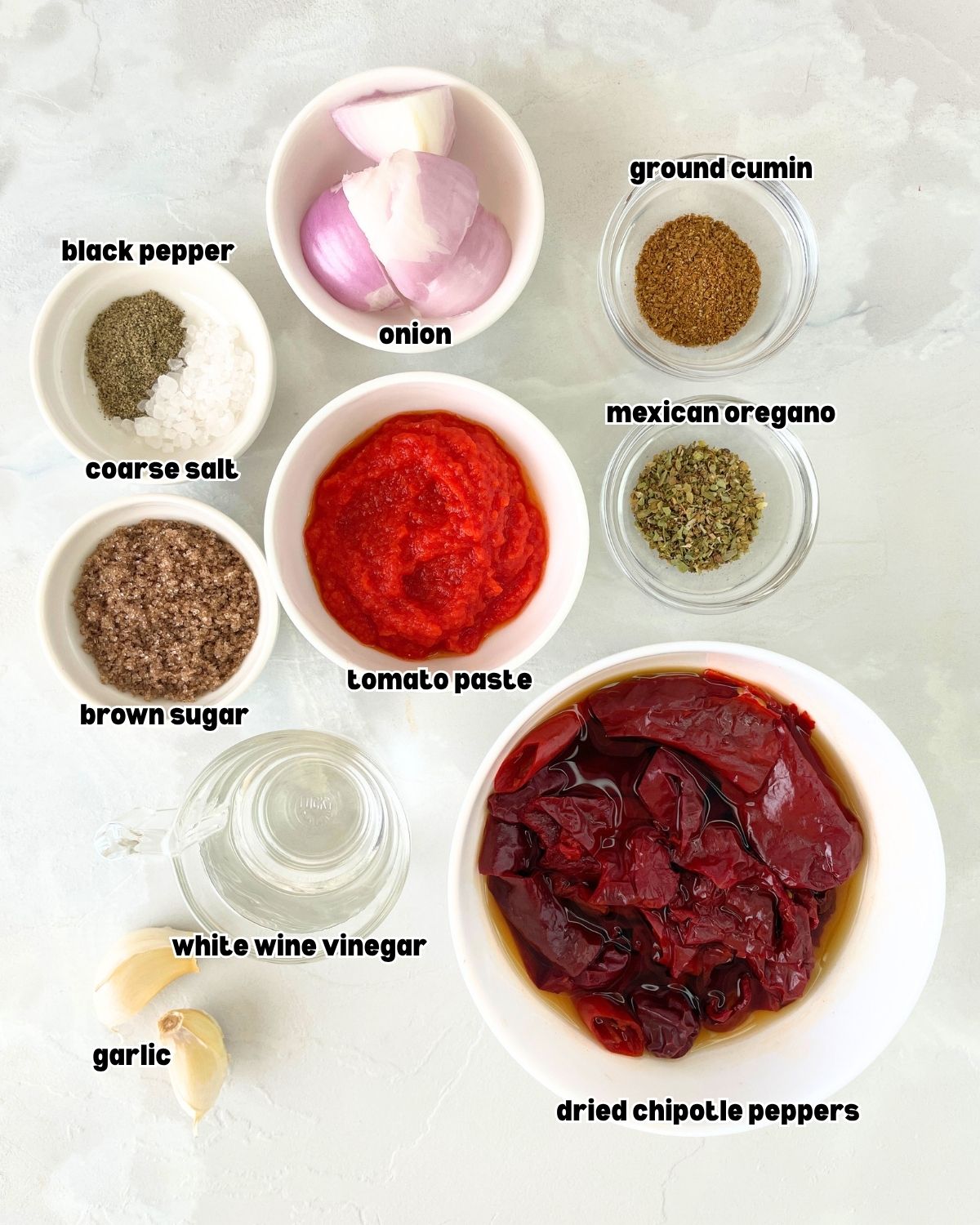
Dried chilies: Chipotle supplies the smoky flavor, while Guajillo and Ancho round out the blend (I used them for my Mexican Chamoy dip too). Remove the stems before soaking. Heat varies between chilies and batches.
Tomato puree: Gives the sauce its tomato base. Use puree as listed in the card; concentrated tomato paste will give a different consistency.
Onion + garlic: These go into the blender with the softened chilies to build the savory base. Use air fried roasted garlic for a smoky depth.
Vinegar + brown sugar: Vinegar adds tang, and brown sugar balances the chili flavor. I like using hot pepper vinegar for a spicier kick.
Mexican oregano + ground cumin: Add herbal warmth to the sauce. Salt and black pepper finish the seasoning.
Neutral oil: A little oil is used in the pan to cook the blended paste, as directed in the recipe card.
See recipe card for quantities.
Substitutions & Variations
- Start with the lower number of Chipotle peppers in the card. Remove some seeds before soaking if preferred, though this will not remove all the heat.
- Consider using chilies de Arbol, another classic used in Mexican cuisine. I used it to my Mexican salsa Macha too.
- If you cannot find Mexican oregano, use a little regular dried oregano. The flavor will be different, so taste as you go.
- Keep the paste slightly coarse as written, or blend longer for a smoother sauce.
How to Make Homemade Chipotle in Adobo
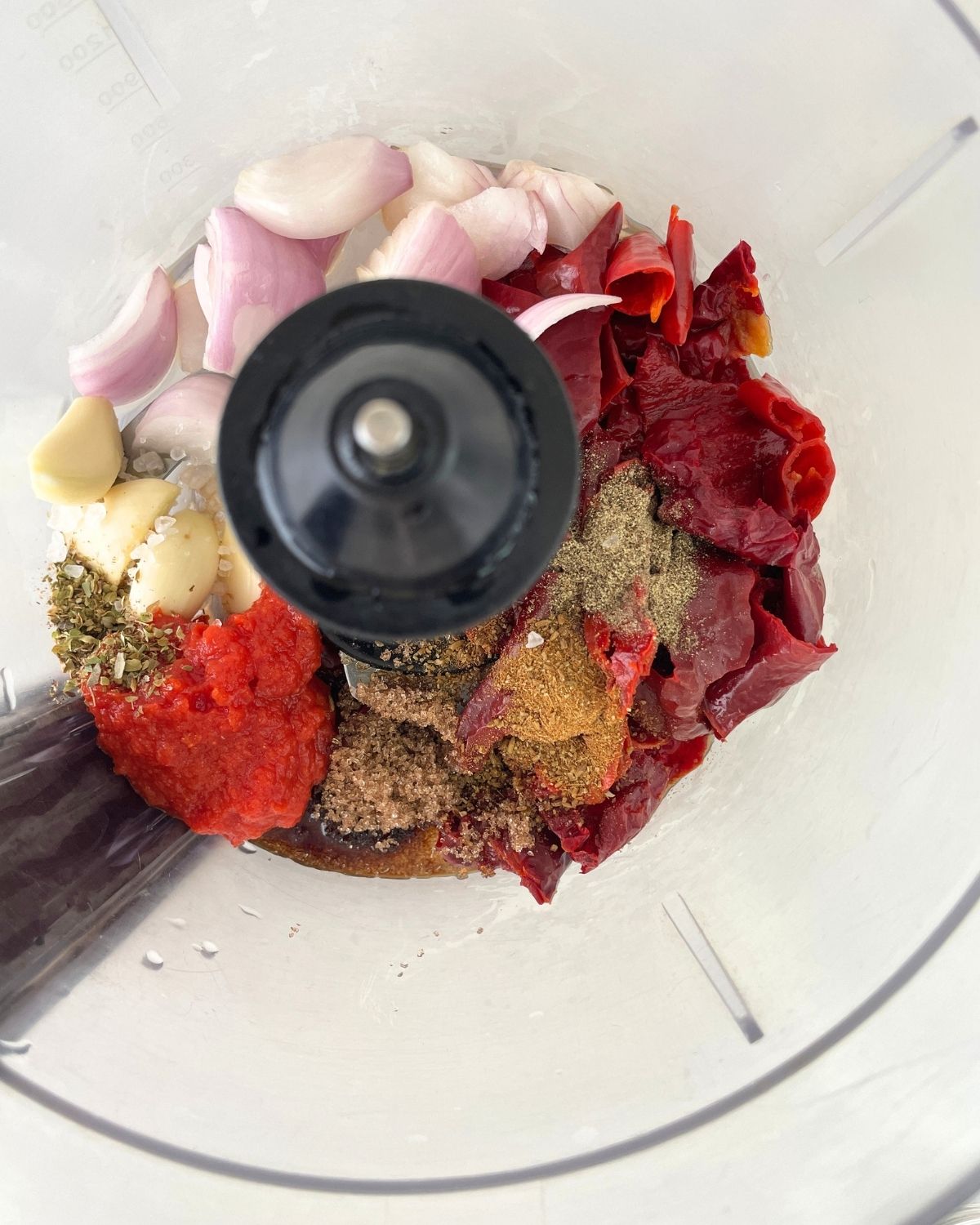
Step 1: Cover the stemmed dried chilies with boiling water and soak for 15–20 minutes, until softened. Transfer the chilies to a blender with the garlic, tomato puree, and diced onion.
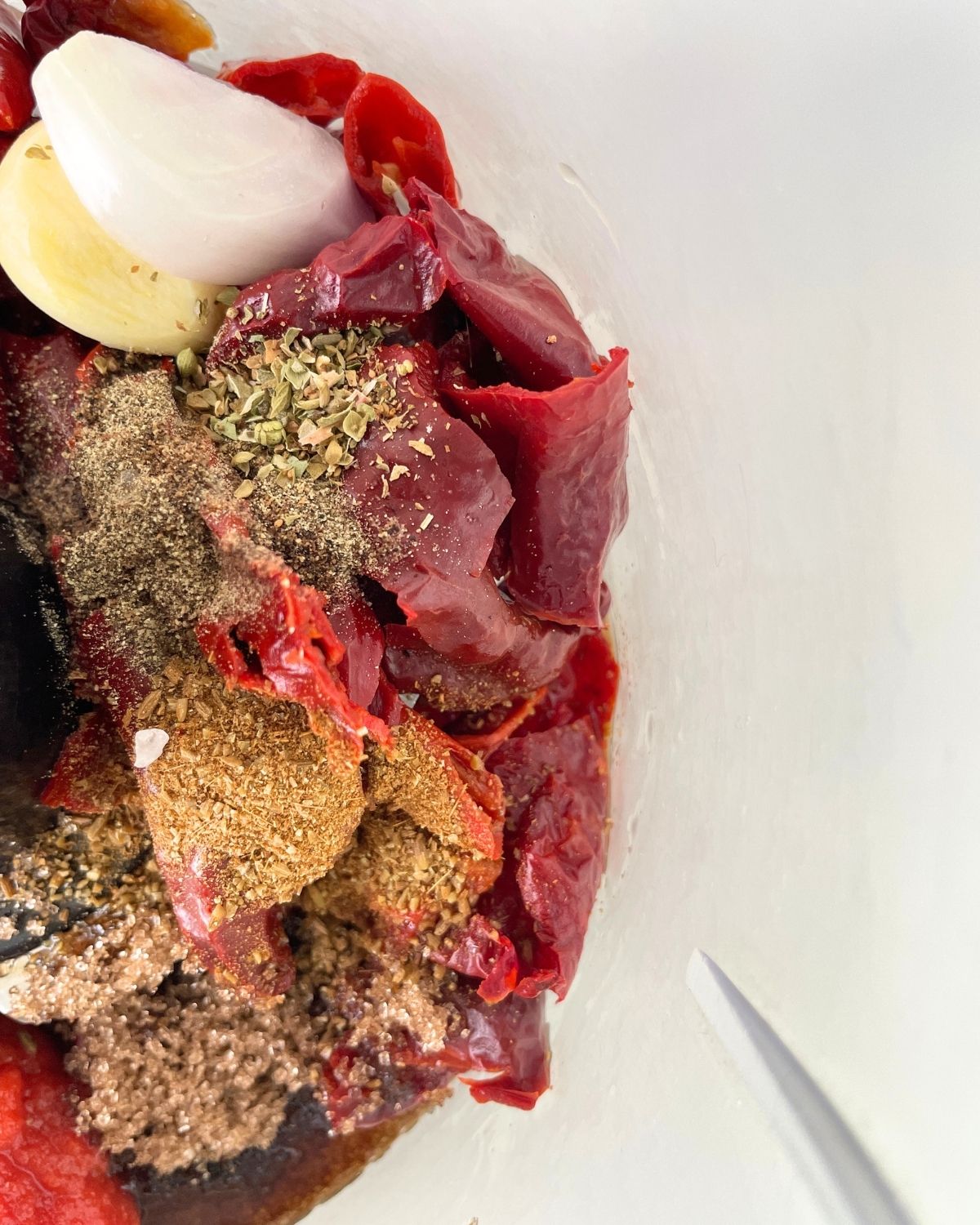
Step 2: Add the brown sugar, vinegar, Mexican oregano, cumin, salt, and black pepper to the blender.
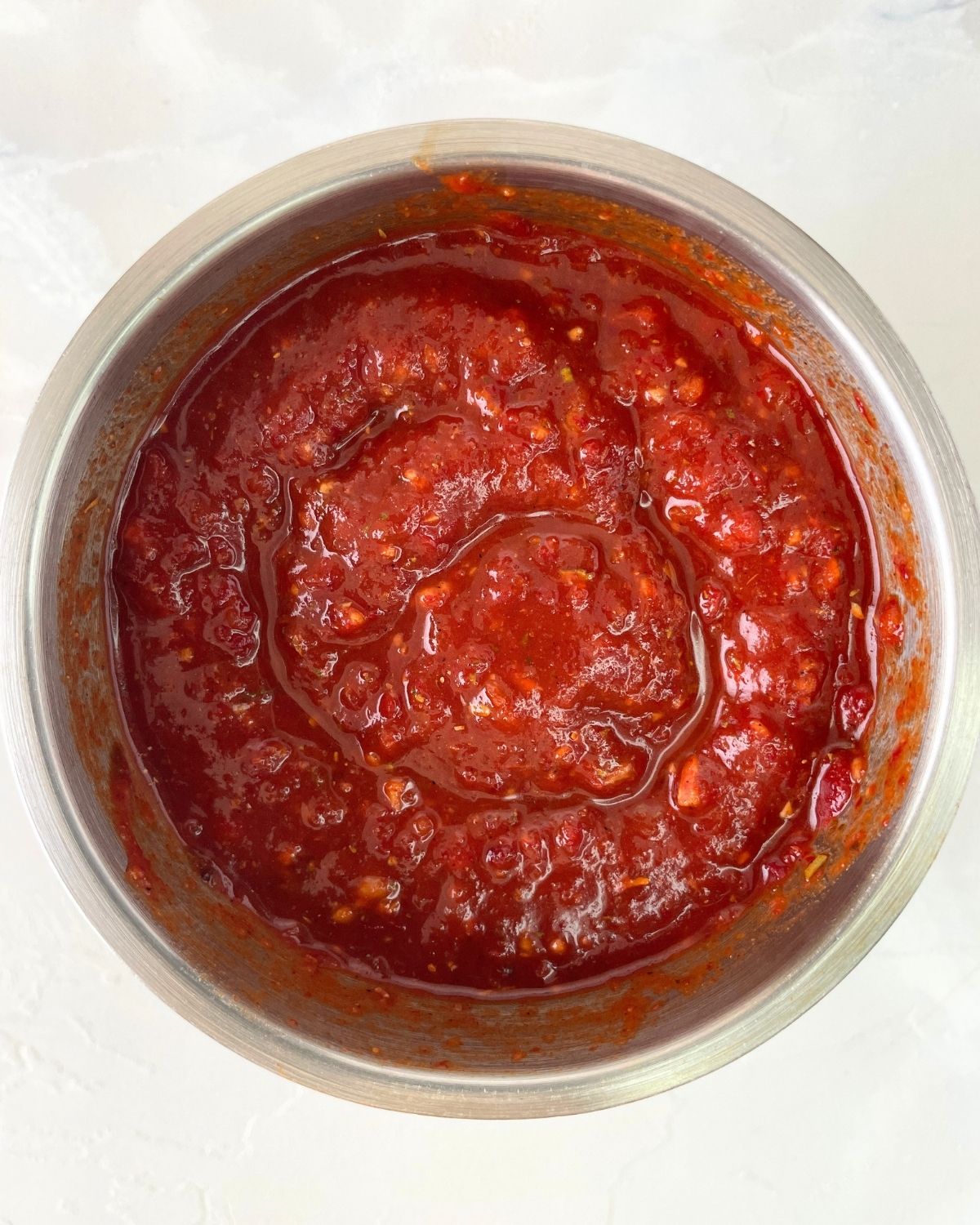
Step 3: Blend for a few minutes until you have a slightly coarse paste. If the blender struggles, stop and scrape down the sides before blending again.
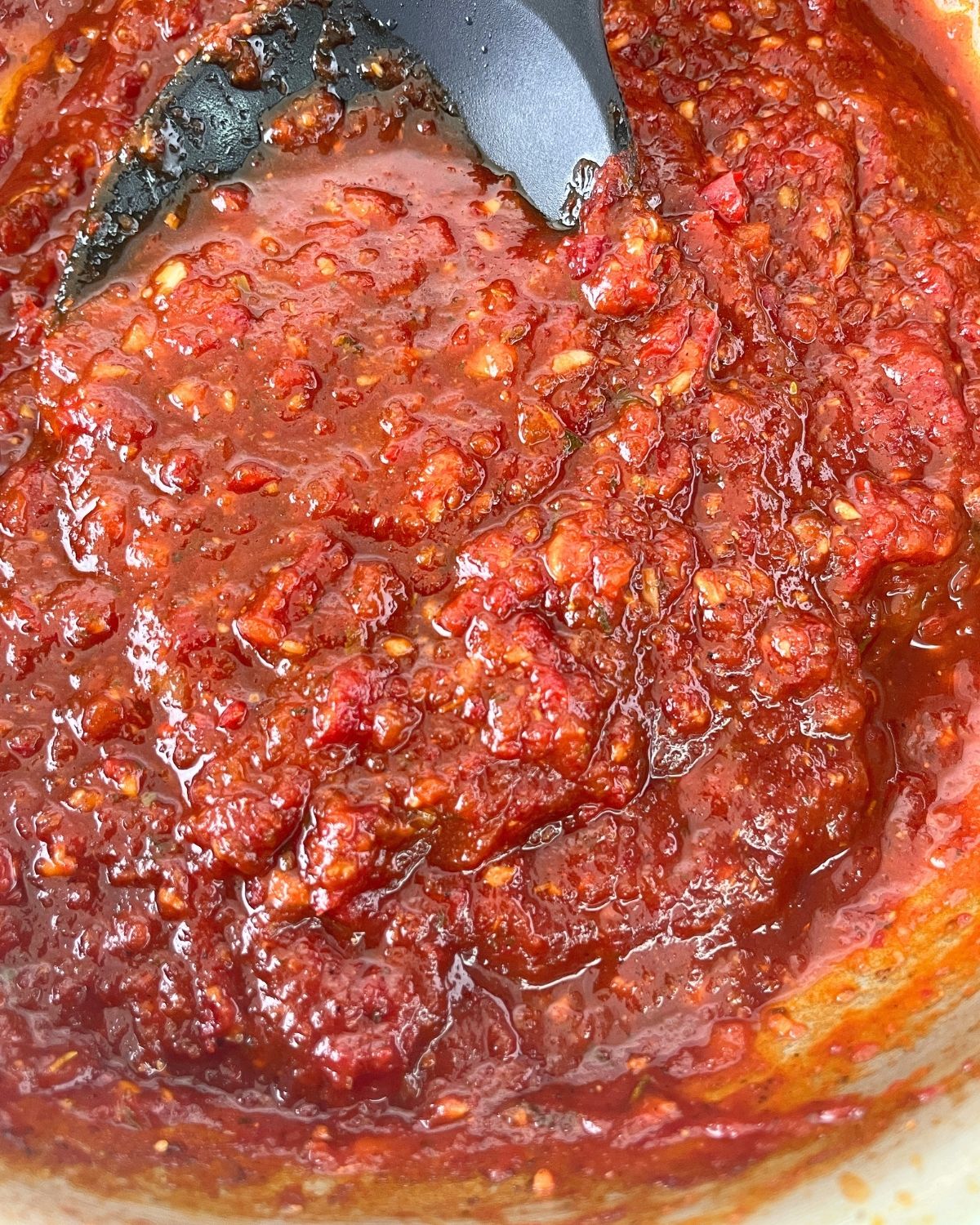
Step 4: Heat 1–2 teaspoons of neutral oil in a pan. Add the paste and cook, stirring regularly, for 10–15 minutes or until thick. Take it off the heat and transfer to a suitable container for cooling and storage.
💭Top Tip
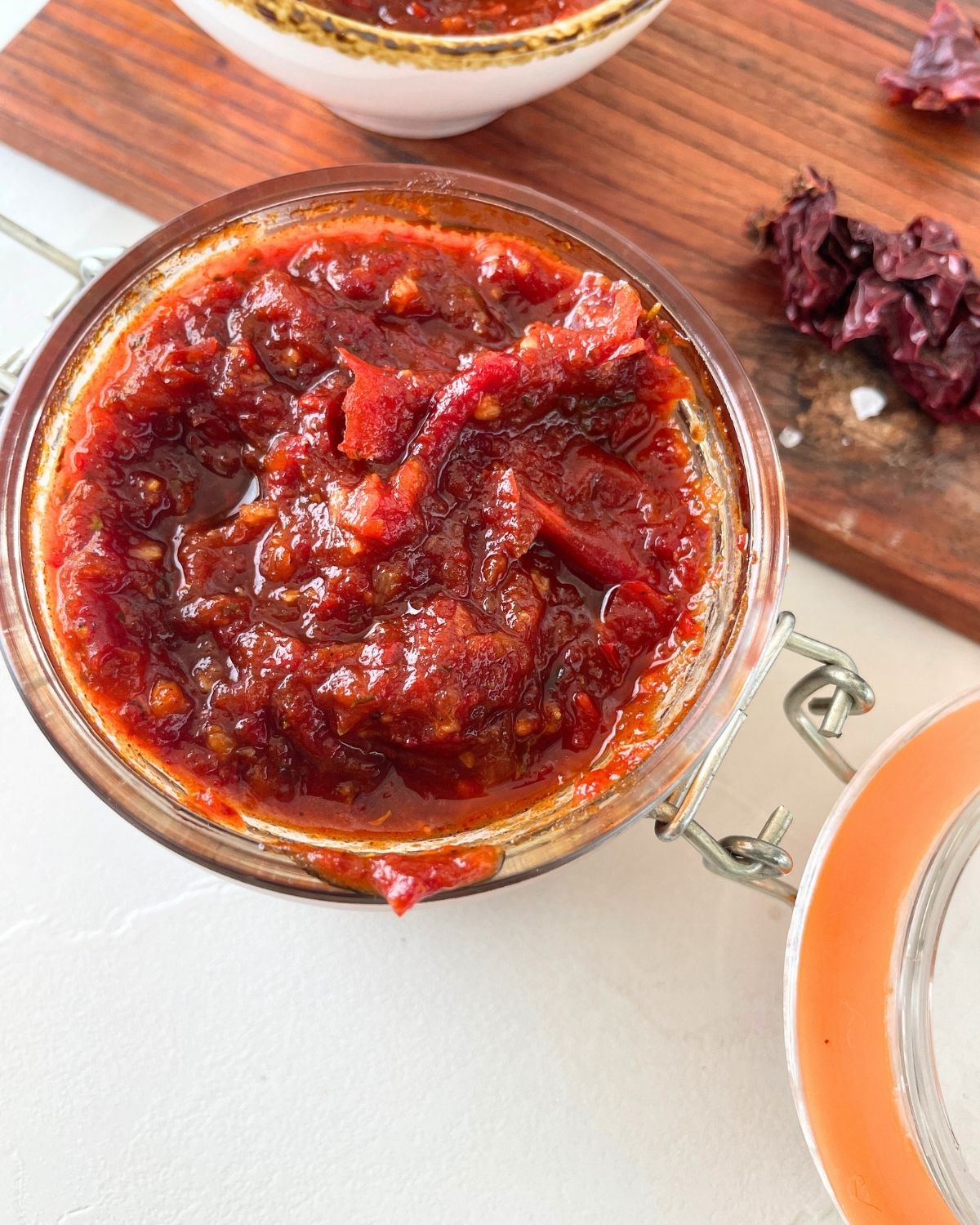
Soften the chilies thoroughly before blending. If they still feel leathery after soaking, give them a little longer in the hot water so they blend more evenly.
Tips & Tricks to Nail the Recipe
- Remove tough stems from the chilies- check every chili before it goes into the blender.
- Do not overfill the blender- let hot ingredients cool slightly and follow your blender’s instructions for warm foods.
- Stir as the sauce thickens. Use moderate heat and scrape the bottom of the pan so the paste does not stick and burn. I do this when I make my homemade BBQ sauce too.
How to Use Homemade Chipotle in Adobo
Stir a small spoonful into black beans, lentils, soups, or a pot of chili. It also works in a marinade with oil and lime juice, or as a smoky addition to taco and burrito fillings. I like using it for my Tajin shrimp taco recipe too.
For a quick dip, mix a little into mayonnaise, homemade sour cream, or plain yogurt. Add it gradually, tasting between additions, so the heat and acidity stay balanced.
Troubleshooting and FAQs
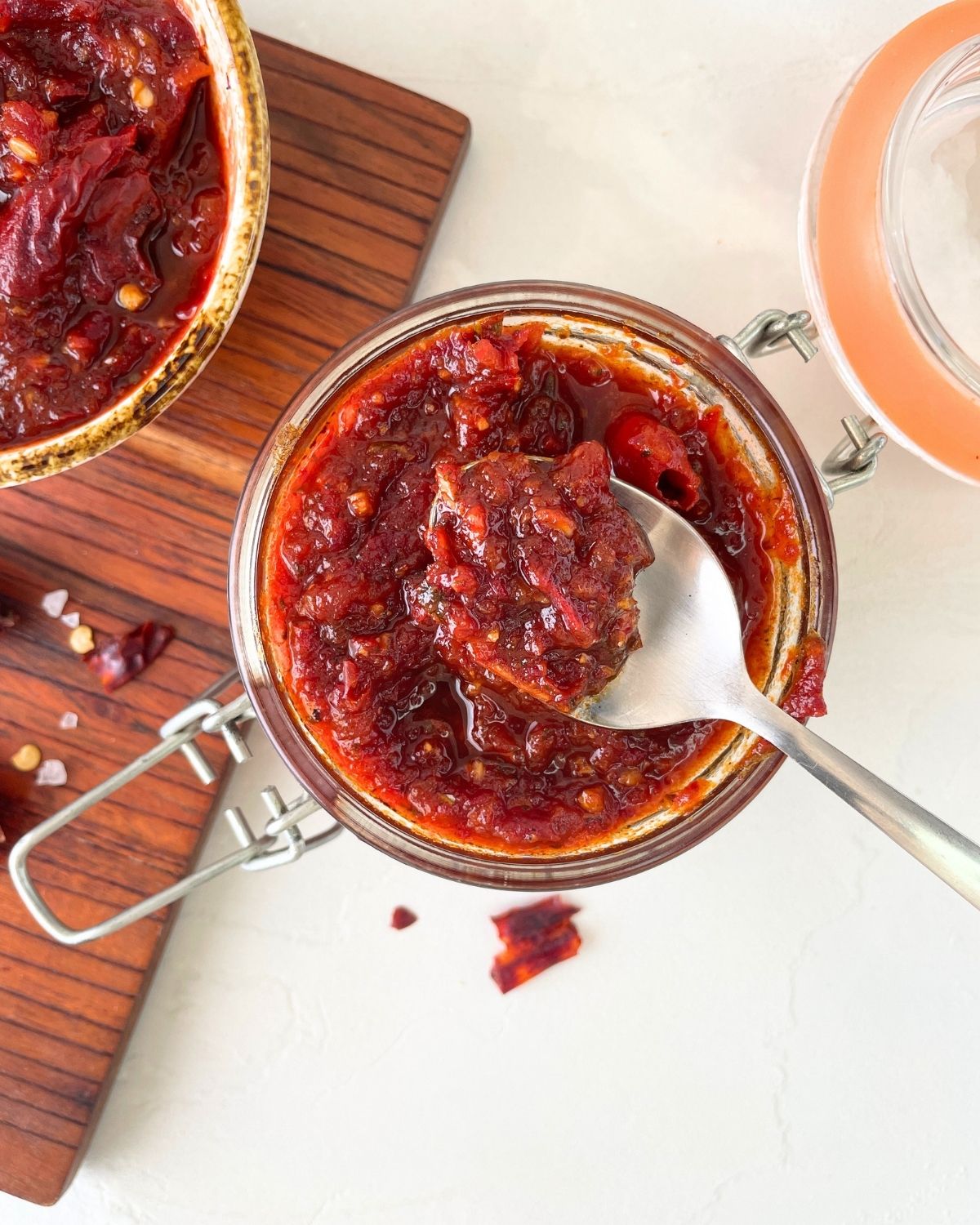
This recipe blends chipotle, guajillo, and ancho chilies into a thick adobo paste. It is useful where you want smoky chili flavor, but it does not produce whole chipotle peppers in sauce.
Make sure the chilies are fully softened first. Scrape down the blender and, if needed, add a little fresh water at a time to help the blades move. The sauce will thicken again as it cooks.
Use the lower number of chipotle peppers listed in the card. For serving, dilute a small amount of finished sauce with more of the food you are adding it to, such as beans, tomato sauce, or a creamy dip.
Refrigerate promptly in a covered container and use within 3–4 days. For longer storage, freeze in small portions, then transfer the frozen portions to a freezer-safe container. Thaw in the refrigerator.
No. This recipe is for refrigerated or frozen storage and is not a tested canning recipe. Do not treat a sealed jar as shelf-stable.
More Scratch-Made Sauces
Looking for other recipes like this? Try these:


If you tried this homemade Chipotle in adobo or any other recipe on my website, please leave a 🌟 star rating and let me know how it went in the 📝 comments below. Thanks for visiting!
Homemade Chipotle in Adobo

Ingredients
- 1-2 Chipotle peppers
- 3-4 Guajilo chilies
- 2-3 Ancho chilies
- 3 tablespoon tomato puree
- 2 tablespoon vinegar
- 1 teaspoon Mexican oregano
- 1 tablespoon brown sugar
- 1 onion
- 3-4 garlic
- 1 teaspoon ground cumin
- 1 teaspoon salt
- ½ teaspoon black pepper
Instructions
- Soak the chilies in boiling water for 15-20 minutes. Transfer to a blender jar along with garlic, tomato puree and diced onion.
- Also add the brown sugar, vinegar, oregano, cumin, salt and pepper.
- Blend for a few minutes until you get a slightly coarse paste.
- Transfer to a pan with 1-2 teaspoon neutral oil and cook down the mixture for 10-15 minutes or until it thickens.
- Take off heat, allow it to cool down completely and transfer to a jar.
Notes
- Use dried chipotle, guajillo, and ancho chilies for a smoky, slightly sweet sauce with layers of rich chili flavor.
- Remove the tough stems from the dried chilies before soaking. You can also remove some of the seeds if you prefer a milder sauce.
- Soak the chilies in boiling water for 15–20 minutes, or until they are completely softened. This makes them easier to blend into a smooth paste.
- Start with fewer chipotle peppers and adjust according to your preferred spice level, as the heat can vary between batches.
- Use tomato puree rather than concentrated tomato paste to get the right consistency and balance of flavors.
- Blend the ingredients into a slightly coarse paste, or process for longer if you prefer a smoother adobo sauce.
- Add a tablespoon or two of fresh water if the mixture is too thick to blend, but avoid adding too much since the sauce should have a concentrated consistency.
- Cook the blended mixture over low to medium heat, stirring frequently to prevent it from sticking or burning as it thickens.
- Adjust the vinegar, brown sugar, and salt to balance the smoky, tangy, and slightly sweet flavors.
- Use this homemade chipotle in adobo in tacos, burritos, chili, marinades, soups, or creamy dips. Start with a small amount and add more to taste.
- Store the cooled sauce in an airtight container in the refrigerator for up to 3–4 days, or freeze it in small portions for longer storage.
- This recipe is not suitable for room-temperature storage or home canning without a tested preservation method.